CM Himanta Flags Assam's First Matcha Push in $10 Bn Market
Synopsis
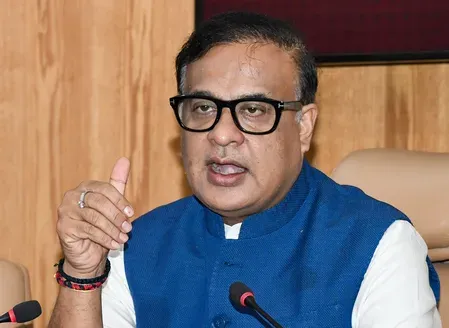
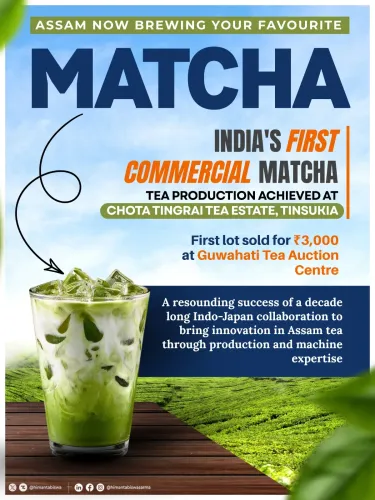
Assam Chief Minister Himanta Biswa Sarma has highlighted the state's first-ever matcha tea production, pointing to a global market growing at over 10 per cent annually and projected to reach US $10 billion. Currently dominated by Japan and China, the segment now has an Indian contender for the first time.
Key Takeaways
Assam has produced matcha tea for the first time, marking India's debut in a segment long dominated by Japan and China .
CM Himanta Biswa Sarma cited the global matcha market as growing at over 10 per cent annually , with projections to reach US $10 billion .
Assam's tea industry dates to the 1830s and has historically centred on black tea; the state received a Geographical Indication tag in 2004 .
The move fits a broader pattern of northeastern states pursuing high-value agricultural niches to supplement conventional commodity exports.
Formal state or central government support — including possible Tea Board of India involvement — has not yet been confirmed.
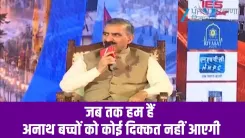
Sarma shared a video featuring the innovators behind the matcha breakthrough, signalling political backing at the highest level of the state.
Assam Chief Minister Himanta Biswa Sarma on Thursday, 9 July 2026, highlighted the state's maiden entry into matcha tea production, framing it as a strategic economic opportunity in a global market he described as growing at over 10 per cent annually and projected to touch US $10 billion in the coming years.
Context
Sarma shared a video featuring what he called the 'innovators' behind Assam's first-ever foray into matcha, positioning the development as the state — and by extension India — finally securing 'a foothold in this growing business.' The post draws an explicit link between agricultural innovation and commercial scale, noting that global matcha production is currently dominated by Japan and China.
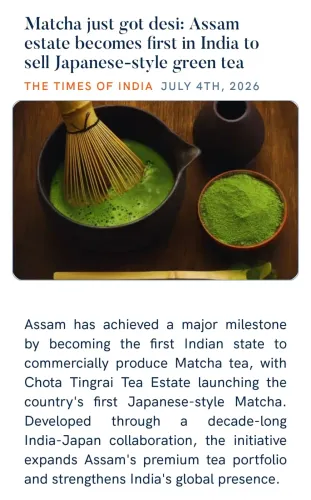
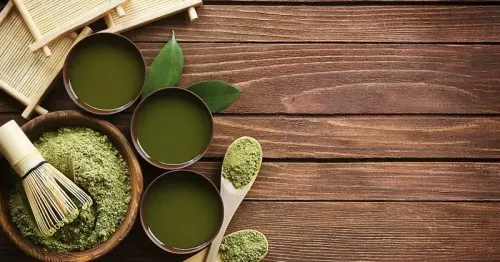
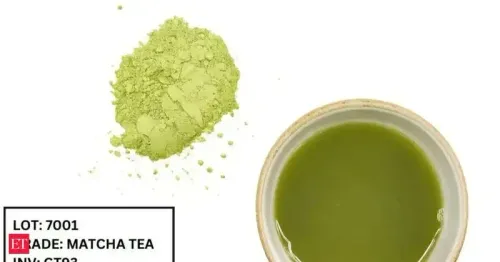
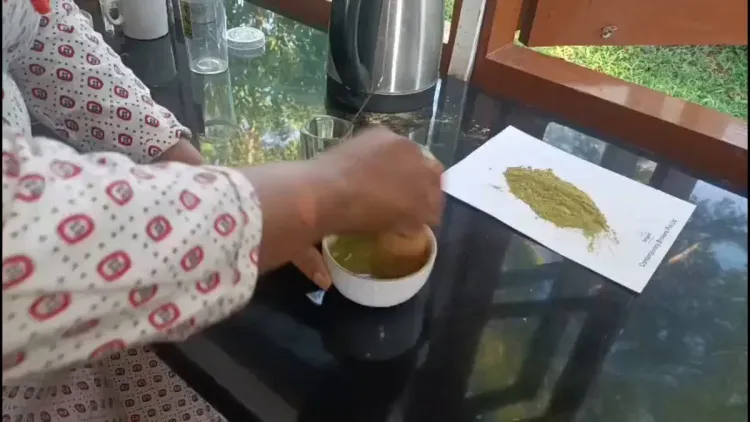
Matcha is a finely ground powder of specially shade-grown green tea leaves, commanding premium prices in global wellness, food, and beverage markets. Unlike conventional Assam black tea, it requires distinct cultivation techniques, including shading plants before harvest to boost chlorophyll content.
Policy Backdrop
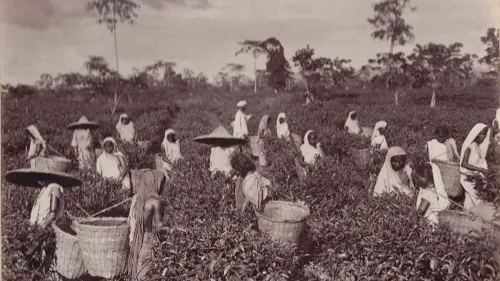
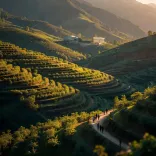
Assam has been the backbone of India's tea industry since the 1830s, when British colonial enterprise established large-scale black tea cultivation in the Brahmaputra Valley. The state's black tea received a Geographical Indication tag in 2004, cementing its identity as a premium commodity.
However, the industry has faced persistent pressure from volatile commodity prices, rising input costs, and competition from lower-cost producers. A pivot toward high-value specialty segments such as matcha aligns with a broader push across India's northeastern states to move beyond conventional commodity exports and capture greater value from existing agricultural expertise.
The Tea Board of India, which operates under the central government, has in recent years encouraged value addition and diversification among growers. Whether formal institutional support will follow this private innovation into matcha at scale remains to be seen.
Stakeholders and Impact
Assam's tea sector supports hundreds of thousands of workers across gardens, processing units, and export supply chains. A successful matcha segment could open new income streams for growers willing to invest in shading infrastructure and modified processing equipment, though the capital requirements differ significantly from conventional black tea production.
For agricultural exporters, a domestically produced matcha supply would reduce dependence on Japanese and Chinese imports, which currently dominate the premium end of the market. India's growing domestic wellness and café culture also provides a ready near-term consumer base that could absorb early-stage production volumes.
What's Next
The immediate question is whether Assam's matcha experiment remains a niche pilot or attracts state-backed cultivation schemes and export promotion support. CM Sarma's public endorsement signals political will at the top, which typically precedes policy announcements in the state's agriculture sector.
Observers will watch for any Tea Board or central ministry engagement, formal quality certification pathways for Indian matcha, and whether the innovators featured in the video move toward commercial-scale supply. If Assam can replicate even a fraction of Japan's export success in this category, it would mark a meaningful shift in India's specialty tea positioning globally.
Point of View
He is signalling to investors and policymakers, not just consumers. The move fits a pattern of northeastern chief ministers leveraging social media to attract capital and central government attention to region-specific innovations. The real test will be whether this translates into structured policy support or remains an inspiring one-off pilot.
NationPress
9 Jul 2026
Frequently Asked Questions
Has Assam started producing matcha tea?
Yes, according to Assam Chief Minister Himanta Biswa Sarma , the state has made its first-ever foray into matcha tea production, marking India's debut in this specialty segment.
How big is the global matcha tea market?
CM Sarma cited the global matcha market as growing at over 10 per cent annually and projected to reach US $10 billion in the coming years, though these figures come from his post and have not been independently verified by NationPress.
Which countries dominate matcha production?
Japan and China currently dominate global matcha production. Assam's entry represents the first significant attempt by an Indian region to compete in this market.
What is different about matcha compared to regular Assam tea?
Matcha is made from shade-grown green tea leaves that are stone-ground into a fine powder, requiring different cultivation and processing methods from the conventional black tea for which Assam is historically known.
Will the Indian government support Assam's matcha production?
No formal announcement of central or state government support has been made yet. Observers are watching for potential Tea Board of India involvement or state-backed cultivation schemes following CM Sarma's public endorsement.