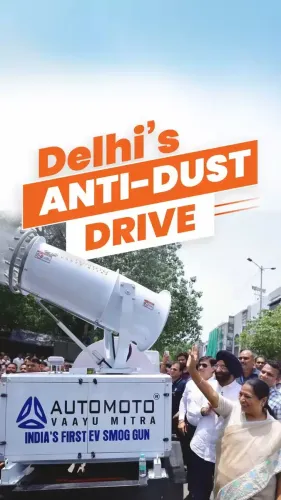
CM Rekha Gupta Launches Delhi Clean Air Action 2026
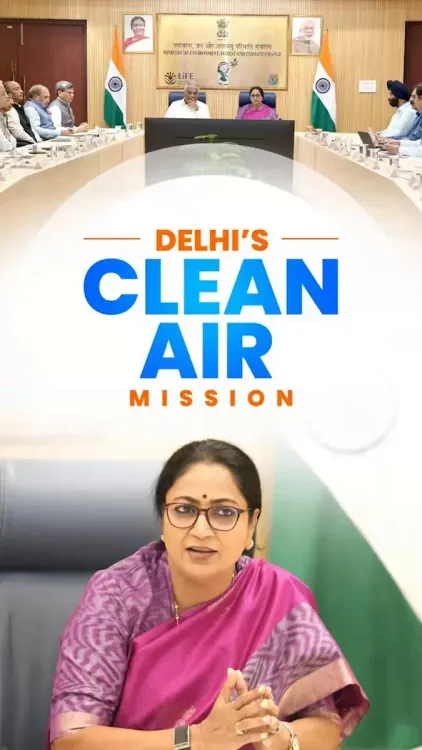
Synopsis
Delhi Chief Minister Rekha Gupta has announced the Delhi Clean Air Action 2026, a plan centred on 10 interventions targeting vehicle emissions, dust, waste burning and industrial pollution, while calling on citizens to participate through Jan Bhagidari ahead of the capital's high-smog winter season.
Key Takeaways
Delhi Clean Air Action 2026 was announced by CM Rekha Gupta on 29 September 2026 .
The plan outlines 10 focused interventions covering vehicles, road dust, waste burning, and industrial emissions.
Jan Bhagidari (citizen co-ownership) is positioned as a core pillar alongside regulatory enforcement.
Delhi's anti-pollution institutional history includes GRAP (2017) , NCAP (2019) , and the Commission for Air Quality Management Act (2020) .
The plan precedes Delhi's most pollution-intense months — October and November — when stubble burning and cold air trapping worsen AQI readings.
Specific operational details of the 10 interventions, funding, and measurable targets are yet to be released publicly.
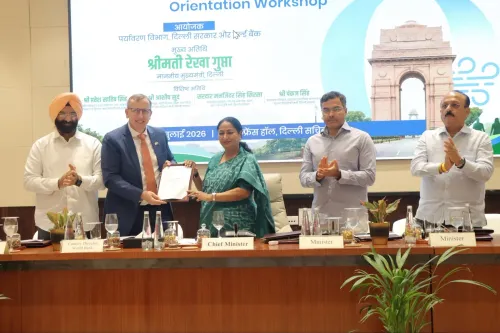
With winter smog season weeks away, Delhi Chief Minister Rekha Gupta has unveiled the Delhi Clean Air Action 2026 — a plan built around 10 focused interventions targeting the capital's most stubborn pollution sources: vehicles, dust, waste burning, and industrial emissions. The announcement, made on Tuesday, 29 September 2026, also puts a public-participation push at the centre of the effort, invoking the term Jan Bhagidari — citizen co-ownership — as a core pillar.
Ten interventions, four pollution fronts
The plan names four broad source categories — vehicular emissions, road and construction dust, solid-waste burning, and industrial discharge — as the primary targets of the 10 interventions. While the specific operational details of each measure are still to be made public, the multi-source framing signals a departure from single-issue crackdowns that have historically dominated Delhi's pollution response. Chief Minister Gupta said the goal is 'a cleaner, healthier Delhi' and called on 'every Delhiite to join this effort through active Jan Bhagidari.'
A decade of action plans — what makes 2026 different
Delhi's battle with bad air has a long institutional paper trail. The Graded Response Action Plan (GRAP), introduced in 2017, established a tiered emergency-response system triggered by rising AQI readings. The central government's National Clean Air Programme (NCAP), launched in 2019, set an ambition of a 20–30% reduction in PM10 and PM2.5 concentrations by 2024 across 131 non-attainment cities, Delhi among them. A year later, Parliament enacted the Commission for Air Quality Management Act (2020) to create a permanent coordinating body across the National Capital Region, replacing the patchwork of state and central agencies that had long struggled to act in concert.
Against that backdrop, the Delhi Clean Air Action 2026 represents the latest layer — this time with an explicit community-mobilisation dimension built in from the outset rather than bolted on after enforcement measures hit their limits.
Jan Bhagidari: enforcement's missing link?
Behavioural change has repeatedly proved harder to deliver than regulatory orders. Stubble burning in neighbouring states, construction-site dust, and garbage fires in residential colonies have all defied top-down mandates. The Jan Bhagidari model — borrowed from urban-governance campaigns elsewhere in BJP-run states — asks residents, vehicle owners, waste handlers, and industry to treat cleaner air as a shared obligation rather than a government problem. Whether the programme includes incentives, awareness drives, or community monitoring mechanisms will determine how much weight the citizen pillar carries in practice.
What to watch before the smog sets in
The real test arrives within weeks. October and November typically mark Delhi's worst air-quality months, as cooler temperatures trap pollutants closer to ground level and post-harvest stubble burning in Punjab and Haryana sends smoke across the region. Rollout timelines, funding allocations, and measurable targets for each of the 10 interventions are still awaited — as are participation metrics that would show whether the Jan Bhagidari call translates into on-ground action. Delhi's air doesn't wait for paperwork.
Point of View
CM Rekha Gupta is front-loading a public-participation narrative that shares ownership of the problem with citizens — a shrewd buffer against the annual blame cycle involving stubble-burning states. The 10-intervention structure signals a more holistic policy frame than past single-source crackdowns, but without published targets or timelines, it risks blending into a decade-long continuum of action plans whose cumulative impact on Delhi's AQI has remained limited. Whether the Jan Bhagidari component generates real behavioural change, or serves primarily as political messaging, will be decided in the next eight weeks.
NationPress
29 Sept 2026
Frequently Asked Questions
What is Delhi Clean Air Action 2026?
Delhi Clean Air Action 2026 is an anti-pollution plan announced by Chief Minister Rekha Gupta that outlines 10 focused interventions targeting key pollution sources including vehicles, road dust, waste burning, and industrial emissions in Delhi.
What is Jan Bhagidari in Delhi's pollution plan?
Jan Bhagidari means citizen co-ownership or public participation. In the context of Delhi Clean Air Action 2026, it is an appeal by CM Rekha Gupta for every Delhi resident to take personal responsibility and contribute to cleaner air through individual actions.
What are the main sources of pollution targeted in Delhi Clean Air Action 2026?
The plan targets four broad source categories: vehicular emissions, road and construction dust, solid-waste burning, and industrial discharge, addressed through 10 specific interventions.
What is GRAP and how does it relate to Delhi's pollution response?
The Graded Response Action Plan (GRAP), introduced in 2017, is a tiered emergency system that triggers escalating anti-pollution restrictions in Delhi-NCR as the Air Quality Index rises. Delhi Clean Air Action 2026 is a complementary year-round plan rather than an emergency measure.
Why is September an important time to announce Delhi's clean air plan?
October and November are historically Delhi's worst months for air pollution, when cooler temperatures trap pollutants and stubble burning in neighbouring states worsens AQI. Announcing the plan in late September allows some runway for measures to be in place before the smog season peaks.