CM Sai Highlights Democratic Shift in Bastar's Hidma Village
Synopsis
Chhattisgarh CM Vishnu Deo Sai on 22 June 2026 highlighted a democratic shift in Bastar, citing Hidma's village as evidence that tribal communities once cut off by Maoist insurgency are now registering as voters, sending children to school, and embracing state-led development.
Key Takeaways
CM Vishnu Deo Sai posted on 22 June 2026 about visible governance changes in Bastar's Hidma village , a region historically associated with Maoist influence.
Residents in former LWE-affected villages are reportedly coming forward to obtain voter identity cards , signalling expanded democratic participation.
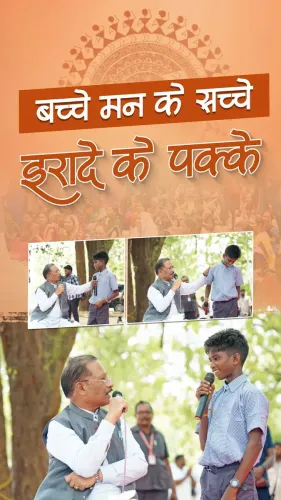
Children returning to schools in interior Bastar marks a reversal of decades of disrupted education access in conflict zones.
The CM described the shift as 'a victory of trust, security, and good governance,' not merely an expansion of facilities.
The changes build on anti-Naxal security operations and civic outreach intensified after the BJP's return to power in December 2023 .
Upcoming local body elections and rehabilitation scheme outcomes will serve as benchmarks for the durability of Bastar's transformation.
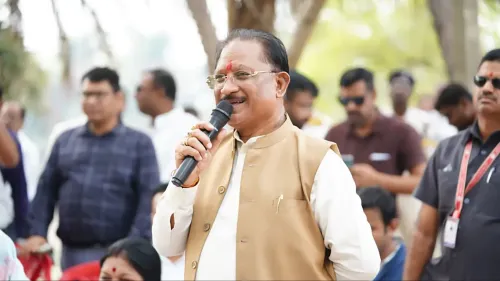
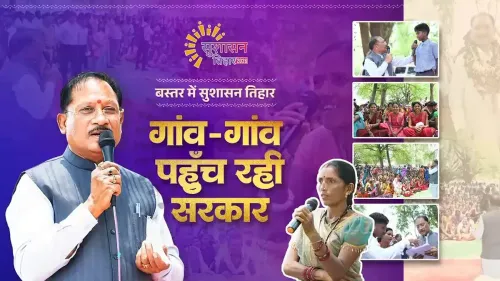
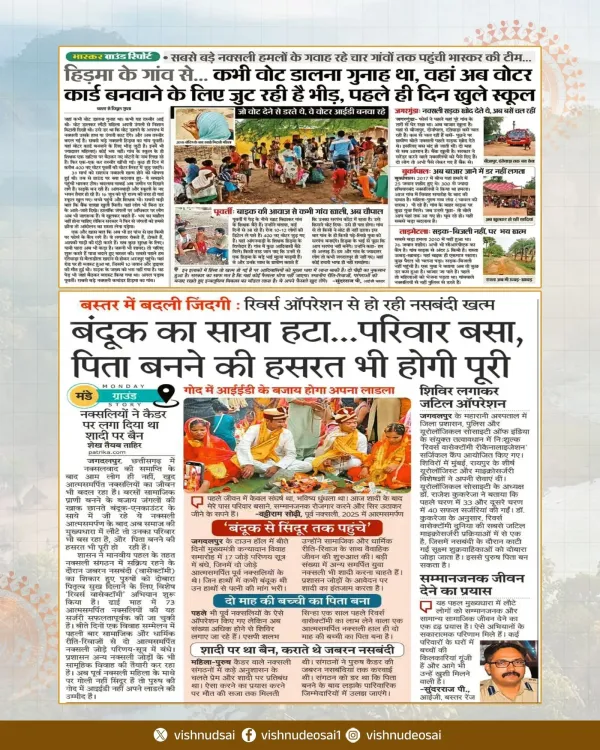
Chhattisgarh Chief Minister Vishnu Deo Sai on Monday, 22 June 2026, shared a post on X highlighting a governance transformation in Bastar, citing Hidma's village as a symbol of change in a region once dominated by Left-Wing Extremism. The Chief Minister pointed to rising voter registration, children returning to schools, and villages embarking on a new path of development as evidence of a democratic revival in the region.
Writing in Hindi, CM Sai said: 'हिड़मा के गांव से बदलते बस्तर की तस्वीर…' — 'A picture of changing Bastar from Hidma's village… where once attempts were made to suppress the voice of democracy, today people are themselves coming forward to get voter identity cards made, children are returning to schools, and villages are moving forward on a new path of development.' He added that this transformation is 'not merely an expansion of facilities, but a victory of trust, security, and good governance.'
Context
Bastar, a sprawling division in southern Chhattisgarh, has for decades been one of the most conflict-affected regions in India due to sustained Maoist insurgency. Access to basic democratic rights — including voter registration — was severely constrained for tribal communities living in interior villages. The reference to Hidma's village invokes a locality historically associated with Maoist influence, making the claimed shift symbolically significant for the state government's narrative.
CM Sai, who was sworn in as Chief Minister in December 2023 following the BJP's return to power in Chhattisgarh, has consistently positioned tribal development and security normalisation in Bastar as central pillars of his administration. His post frames the changes on the ground as a direct outcome of that governance focus.
Policy Backdrop
The current state government intensified both security operations and civic outreach programmes in the Bastar division after the 2023 Chhattisgarh assembly elections. These efforts built on central and state anti-Naxal initiatives dating to the mid-2010s, which included road connectivity projects and school infrastructure expansion in Left-Wing Extremism-affected blocks.
Across multiple LWE-affected districts nationally, documented reductions in Maoist incidents have historically been followed by higher electoral participation and improved access to welfare services — a pattern the Chhattisgarh government argues is now visible in interior Bastar. The emphasis on voter identity card enrolment is particularly notable, as it signals the extension of constitutional citizenship rights to communities that were previously cut off from the democratic process.
Stakeholders and Impact
The communities most directly affected are Bastar's tribal populations, particularly those in remote villages that remained inaccessible to state services during periods of active conflict. Children returning to schools represents a generational shift, with education access long disrupted in areas where schools were targeted or abandoned due to extremist activity.
Voter registration drives in these areas carry both administrative and political weight — enfranchising previously excluded citizens while also expanding the electorate in constituencies where the state government has invested heavily in security and development. Rehabilitation schemes for Maoist surrenders and the rollout of additional civic infrastructure remain ongoing priorities that will determine the durability of these gains.
What's Next
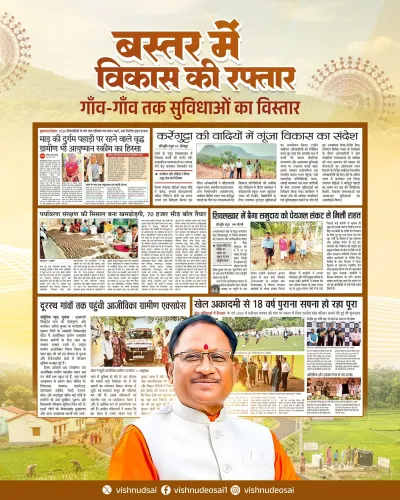
The state government's stated commitment — to deliver 'democracy, development, and dignity' to every citizen at the last mile — will be tested by the pace of infrastructure rollout and service delivery in the remaining interior blocks of Bastar. Monitoring of Maoist surrender and rehabilitation numbers, school enrolment data, and voter registration figures in these zones will serve as concrete benchmarks for the transformation CM Sai describes.
With local body elections on the horizon in Chhattisgarh, the political and administrative focus on normalising life in Bastar is expected to intensify, making the region a key indicator of whether the BJP government's security-plus-development model can deliver lasting democratic integration in India's most conflict-scarred tribal heartland.
Point of View
Framing Bastar's incremental normalisation as a civilisational achievement — extending constitutional citizenship to communities long excluded by insurgency. By anchoring the narrative in Hidma's village, a name that carries strong symbolic weight in the context of Maoist leadership, the BJP government signals that its security-plus-development model has penetrated even the most resistant pockets of the region. This fits a broader BJP pattern of using visible democratic markers — voter cards, school attendance — as proof of 'last-mile' governance delivery ahead of electoral cycles. The real test will be whether these gains are sustained through independent data on enrolment, infrastructure completion, and conflict incidents rather than political messaging alone.
NationPress
22 Jun 2026
Frequently Asked Questions
What did Chhattisgarh CM Vishnu Deo Sai say about Bastar?
CM Vishnu Deo Sai said on 22 June 2026 that villages in Bastar, including Hidma's village, are witnessing a democratic transformation, with residents getting voter identity cards, children returning to schools, and communities moving toward development — calling it a victory of trust, security, and good governance.
What is the significance of Hidma's village in Bastar?
Hidma's village in Bastar carries symbolic significance as a locality historically associated with Maoist influence, making the reported shift toward voter registration and school attendance particularly notable for the state government's governance narrative.
How has Bastar changed after the 2023 Chhattisgarh elections?
After the BJP's return to power in December 2023, the Chhattisgarh government intensified security operations and civic outreach in Bastar, which the administration credits with enabling higher voter registration, improved school attendance, and broader welfare delivery in former conflict zones.
Why were tribal communities in Bastar unable to vote or access schools earlier?
Prolonged Left-Wing Extremism in Bastar restricted state access to interior villages, leaving tribal communities cut off from voter registration, education, and welfare services for decades. Security normalisation has gradually reopened these areas to state delivery mechanisms.
What is the Chhattisgarh government's plan for Bastar's development?
The state government has committed to delivering democracy, development, and dignity to every last-mile citizen in Bastar through continued security operations, road connectivity, school infrastructure, voter enrolment drives, and Maoist surrender and rehabilitation schemes.