FIR Filed Against 8 AAP Leaders After Mumbai Protest at Raghav Chadha's Home
Synopsis
Seven AAP Rajya Sabha MPs, including Raghav Chadha, merged with BJP — and now police have filed an FIR against eight AAP leaders who protested outside Chadha's Mumbai home. The mass defection exploits a two-thirds anti-defection loophole, triggering a constitutional crisis that Punjab CM Bhagwant Mann is taking directly to President Murmu.
Key Takeaways
Eight AAP leaders , including Mumbai Working President Reuben Mascarenhas , have been named in an FIR filed by Khar Police Station after a protest outside Raghav Chadha's Mumbai residence on April 27 .
Protesters chanted "Traitor Raghav Chadha" and were detained before being released after notices were served; the FIR was registered under BNS Sections 189(2), 189(3), and 223 .
Raghav Chadha and six other AAP Rajya Sabha MPs announced their merger with the BJP last week, crossing the two-thirds threshold required under India's anti-defection law.
AAP's Rajya Sabha strength has dropped from 10 to 3 members following the mass defection, severely limiting the party's parliamentary presence.
Punjab CM Bhagwant Singh Mann has sought an appointment with President Droupadi Murmu to push for the disqualification of the rebel MPs.
The defection carries a notable irony: Chadha himself had previously advocated for reforms to India's anti-defection law, which he is now using to protect his switch to the BJP.
Mumbai, April 27: Aam Aadmi Party (AAP) workers and leaders staged a fierce demonstration outside the Mumbai residence of Rajya Sabha MP Raghav Chadha on Sunday, protesting his reported defection to the Bharatiya Janata Party (BJP). The protest prompted swift police intervention, resulting in multiple detentions and a First Information Report (FIR) filed against eight AAP leaders, including Mumbai Working President Reuben Mascarenhas.
What Happened Outside Chadha's Residence
Protesters gathered outside Raghav Chadha's Mumbai home in the Khar area, raising incendiary slogans including "Traitor Raghav Chadha", reflecting the party's fury over his decision to abandon AAP after years of being one of its most prominent faces. The demonstration turned intense enough to warrant intervention by the Khar Police Station.
Police detained several demonstrators, later issuing notices to them before releasing them. The FIR has been registered under Sections 189(2), 189(3), and 223 of the Bharatiya Nyaya Sanhita (BNS), along with applicable provisions of the Maharashtra Police Act, pertaining to alleged unlawful assembly and protest activities.
The Political Earthquake: Chadha and Six AAP MPs Join BJP
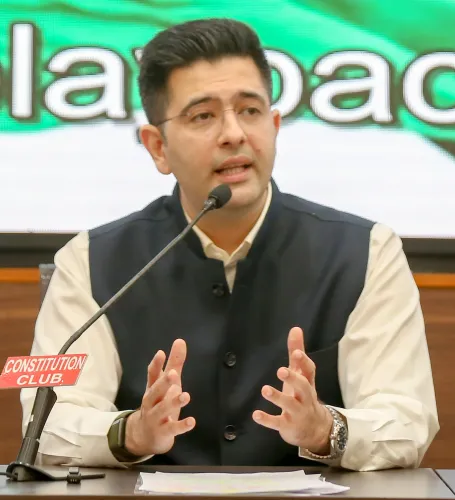
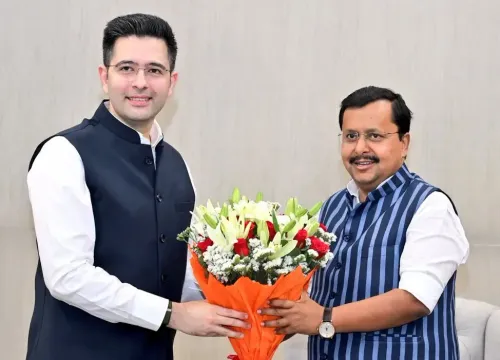
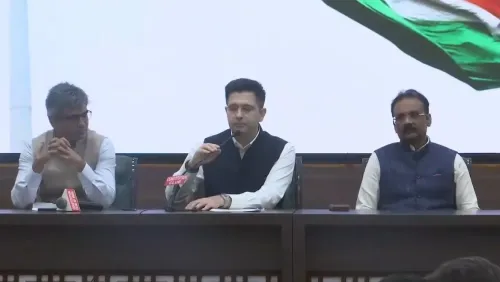
The protest is a direct fallout of a seismic political development last week, when Raghav Chadha and six other AAP Rajya Sabha MPs formally announced their departure from the party and merger with the BJP in the Upper House. The seven MPs framed the move as a group merger rather than individual defections — a legally significant distinction under India's Tenth Schedule, commonly known as the anti-defection law.
AAP had 10 members in the Rajya Sabha. With seven MPs moving together, they crossed the mandatory two-thirds threshold required under the anti-defection law, allowing them to seek legal protection against disqualification. This calculated maneuver effectively shields them from the fate that befell individual defectors in earlier political crises.
Notably, Chadha himself had previously advocated for reforms to anti-defection laws, making his use of the same provisions to switch sides a contradiction that critics have been quick to highlight.
Legal and Constitutional Debate Ignited
The mass defection has triggered a broader legal and constitutional debate in political and academic circles. Scholars and opposition leaders are questioning whether the two-thirds merger rule, originally designed to permit genuine ideological realignments, is being exploited as a loophole for opportunistic party-switching.
The irony runs deep: Chadha, who built his political career on AAP's anti-corruption and anti-establishment narrative, is now part of a merger that critics argue undermines the very democratic accountability he once championed. This contradiction has amplified the anger among AAP's grassroots workers, as evidenced by the Mumbai protest.
Punjab CM Bhagwant Mann Moves to Disqualify Rebel MPs
Punjab Chief Minister Bhagwant Singh Mann has sought an urgent appointment with President Droupadi Murmu to press AAP's case for the disqualification of its rebel Rajya Sabha members. Chadha had been elected to the Rajya Sabha from Punjab, making this a particularly charged issue for the state's ruling party.
AAP's leadership argues that the merger is constitutionally invalid and that all seven MPs should face disqualification proceedings. The Rajya Sabha Chairman will play a pivotal role in deciding whether the merger meets the legal threshold, and that decision is expected to have far-reaching implications for parliamentary precedent.
Broader Impact and What Comes Next
This episode represents one of the most significant blows to AAP's national ambitions since the party's stunning electoral reversal in the 2025 Delhi Assembly elections. Losing seven of ten Rajya Sabha MPs in one stroke severely diminishes AAP's legislative presence and bargaining power in Parliament.
For the BJP, the merger strengthens its numbers in the Upper House, where it has historically lacked a clear majority — a strategic gain ahead of key legislative sessions. For AAP, the challenge now is rebuilding credibility with its core voter base, particularly in Punjab, where the party governs and where Chadha's betrayal stings the most.
As legal proceedings over disqualification unfold and CM Mann's petition to President Murmu awaits a response, the coming weeks will determine whether India's anti-defection framework can withstand yet another stress test — or whether it will once again prove to be a law with more loopholes than teeth.
Point of View
Which was designed to prevent exactly this kind of calculated party-switching. The fact that Chadha, who once publicly championed reforms to this very law, is now sheltering behind its two-thirds merger clause exposes a breathtaking hypocrisy. For AAP, the real crisis isn't just the loss of seven MPs — it's the collapse of the moral credibility that was always the party's primary political currency. If AAP cannot hold its own elected representatives accountable, its claim to be an alternative to India's transactional political culture rings increasingly hollow.
NationPress
20 Sept 2026
Frequently Asked Questions
Why was an FIR filed against AAP leaders in Mumbai?
An FIR was filed against eight AAP leaders, including Mumbai Working President Reuben Mascarenhas, after they staged a protest outside Raghav Chadha's Mumbai residence. The case was registered under Sections 189(2), 189(3), and 223 of the Bharatiya Nyaya Sanhita (BNS) for alleged unlawful assembly.
Why did Raghav Chadha leave AAP and join BJP?
Raghav Chadha and six other AAP Rajya Sabha MPs announced their merger with the BJP, framing it as a group merger rather than individual defections. The move allows them to seek protection under India's anti-defection law, which permits mergers if two-thirds of a party's legislative group joins another party.
Is Raghav Chadha's merger with BJP legal under anti-defection law?
The merger is structured to meet the legal threshold under the Tenth Schedule of the Indian Constitution, which requires at least two-thirds of a party's legislative group to merge. AAP had 10 Rajya Sabha MPs, and seven switching together technically satisfies this condition, though AAP is challenging its validity.
What is Punjab CM Bhagwant Mann doing about the AAP defections?
Punjab Chief Minister Bhagwant Singh Mann has sought an urgent appointment with President Droupadi Murmu to present AAP's case for disqualifying the seven rebel Rajya Sabha MPs. AAP argues the merger is constitutionally invalid and the MPs should lose their seats.
How does this defection affect AAP's strength in the Rajya Sabha?
AAP previously had 10 members in the Rajya Sabha. With seven MPs joining the BJP, the party's Upper House strength has been reduced to just three members, significantly weakening its legislative influence at the national level.