FM Sitharaman Presents TEXPROCIL Export Awards in Mumbai
Synopsis
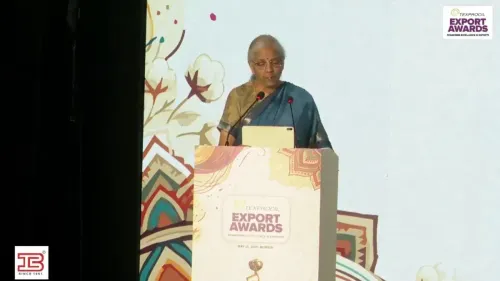
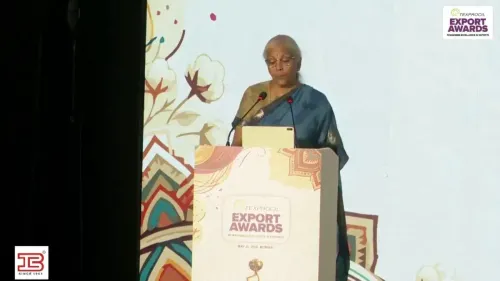
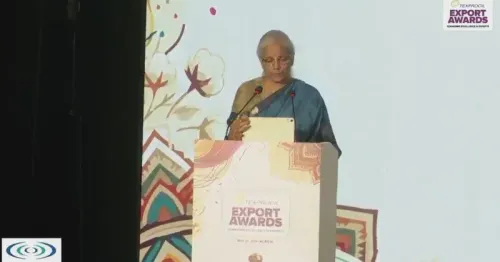
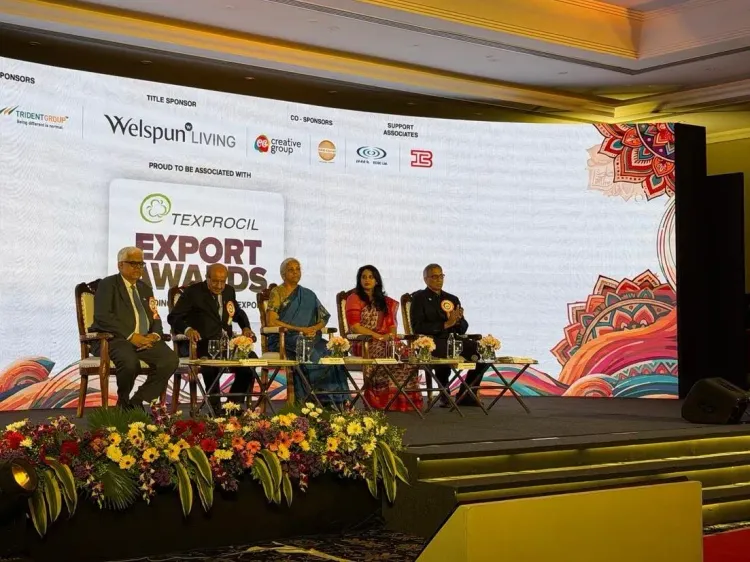
Union Finance Minister Nirmala Sitharaman attended the TEXPROCIL Export Awards in Mumbai on 25 May 2026, presenting awards to India's top cotton textile exporters and reaffirming the government's commitment to strengthening the country's global export footprint.
Key Takeaways
Finance Minister Nirmala Sitharaman attended and presented awards at the TEXPROCIL Export Awards ceremony in Mumbai on 25 May 2026 .
TEXPROCIL (Cotton Textiles Export Promotion Council) is an apex body under the Ministry of Textiles that promotes Indian cotton textile exports globally.
The awards recognised exporters for excellence and contribution to India's global export footprint .
India's textile export policy rests on the PLI scheme (2021) and the RoSCTL scheme , both aimed at boosting competitiveness against rivals like Bangladesh and Vietnam .
The Finance Ministry's engagement with the sector is significant ahead of potential decisions on export incentive budgets and scheme renewals.
Monthly textile export statistics from the Ministry of Commerce will be the next key indicator of sector performance.
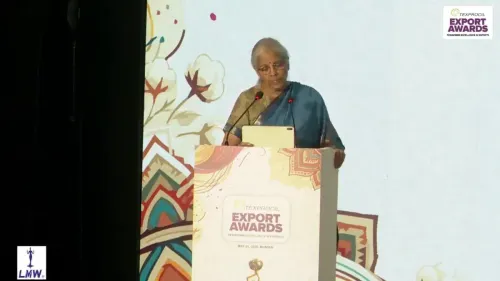
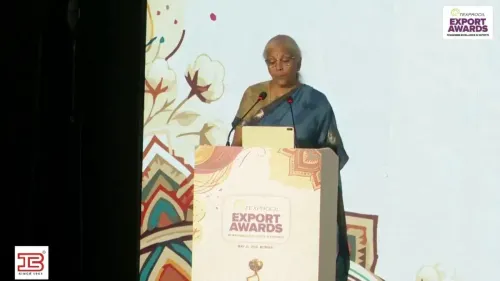
Union Finance Minister Nirmala Sitharaman attended the TEXPROCIL Export Awards ceremony in Mumbai, Maharashtra on Monday, 25 May 2026, presenting awards to India's outstanding cotton textile exporters in recognition of their contribution to the country's global export footprint.
Context
The awards were organised by TEXPROCIL — the Cotton Textiles Export Promotion Council, an apex body under the Ministry of Textiles — to honour exporters who have demonstrated excellence in expanding India's presence in international textile markets. The ceremony was held in Mumbai, the country's commercial capital and a hub for the textile trade. Sitharaman's presence underscored the Finance Ministry's active engagement with labour-intensive export sectors.
TEXPROCIL has long served as the primary institutional interface between cotton textile exporters and the government, facilitating policy feedback and market promotion. Recognition events of this nature form a key part of the export promotion ecosystem, providing a platform for direct dialogue between senior policymakers and industry stakeholders.
Policy Backdrop
India's textile export strategy rests on several interlocking policy instruments. The Production Linked Incentive (PLI) scheme for textiles, notified in 2021, was designed to attract fresh investment in man-made fibre and apparel segments and boost export volumes. Alongside it, the RoSCTL (Rebate of State and Central Taxes and Levies) scheme — extended and revised from 2019 onwards — has provided relief to exporters on embedded duties and levies that would otherwise render Indian goods less competitive abroad.
These instruments sit within a broader framework that includes updated Foreign Trade Policies and active market diversification drives. India faces sustained competition in global textiles from Bangladesh and Vietnam, making recognition and incentive mechanisms critical to retaining and growing market share.
Stakeholders and Impact
The primary beneficiaries of the TEXPROCIL awards ecosystem are cotton textile exporters, including a significant number of MSMEs that depend on export revenues for viability. For these businesses, formal recognition by a senior minister carries both symbolic weight and practical value — signalling continued government support for the sector. The textile industry is one of India's largest employers, making its export performance a direct indicator of livelihood generation.
The Finance Ministry's involvement is particularly significant because decisions on export incentive budgets, duty structures, and scheme extensions ultimately flow through it. Sitharaman's attendance sends a signal to the sector ahead of any forthcoming policy decisions on export support.
What's Next
Attention will now turn to the Ministry of Commerce's monthly textile export statistics, which will indicate whether India's share in global markets is holding against competitive pressure. Any fresh allocation for export incentives in the forthcoming Union Budget will be closely watched by industry bodies including TEXPROCIL. The sector will also look for signals on whether the RoSCTL and PLI schemes will be renewed, expanded, or revised in the next policy cycle.
Point of View
The government reinforces its export-led growth narrative at a time when India is navigating stiff competition from Bangladesh and Vietnam in global textile markets. The optics also serve a practical purpose: keeping open the channel between exporters — many of them MSMEs dependent on scheme continuity — and the ministry that controls incentive budgets. Whether this translates into fresh policy support will become clearer when the next trade data and budget signals emerge.
NationPress
9 Oct 2026
Frequently Asked Questions
What is TEXPROCIL and what does it do?
TEXPROCIL is the Cotton Textiles Export Promotion Council, an apex body under India's Ministry of Textiles. It promotes Indian cotton textile exports globally, provides policy feedback to the government, and organises recognition events like the Export Awards to honour outstanding exporters.
Why did Nirmala Sitharaman attend the TEXPROCIL Export Awards?
As Union Finance Minister, Sitharaman attended to present awards to India's top cotton textile exporters, signalling the Finance Ministry's continued support for the sector and its role in India's export growth strategy.
What government schemes support India's textile exporters?
Key schemes include the Production Linked Incentive (PLI) scheme for textiles, notified in 2021 to boost investment and exports in man-made fibre and apparel, and the RoSCTL (Rebate of State and Central Taxes and Levies) scheme, which provides relief on embedded duties to make Indian textile exports more competitive.
How does India's textile export performance compare with Bangladesh and Vietnam?
India faces sustained competition from Bangladesh and Vietnam in global textile markets. The government uses export promotion councils like TEXPROCIL, incentive schemes, and updated Foreign Trade Policies to help Indian exporters maintain and grow their share.
What should textile exporters watch for next in Indian policy?
Industry stakeholders should watch for the Ministry of Commerce's monthly textile export statistics and any announcements in the forthcoming Union Budget regarding renewal or expansion of the RoSCTL and PLI schemes for textiles.