Giriraj Singh Hails India's Leap to 3 Semiconductor Plants
Synopsis
Union Textiles Minister Giriraj Singh on 7 July 2026 amplified India's semiconductor manufacturing milestone, highlighting the country's journey from zero to three plants in six months under the India Semiconductor Mission, backed by a Rs 76,000 crore outlay and PLI incentives.
Key Takeaways
Union Textiles Minister Giriraj Singh shared a post on 7 July 2026 highlighting India's semiconductor manufacturing progress.
India has moved from zero to three semiconductor plants in approximately six months , according to the shared report.
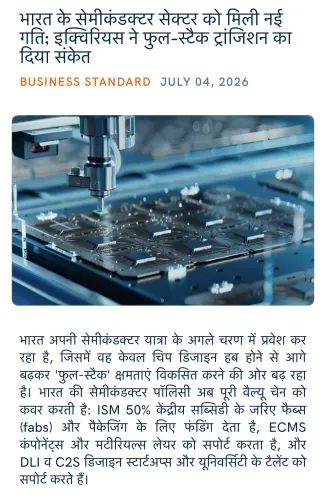
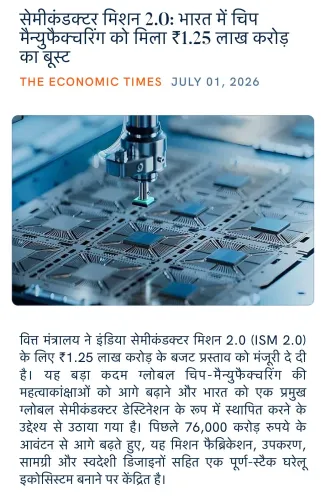
The India Semiconductor Mission was launched in December 2021 with an outlay of Rs 76,000 crore to build a domestic chip ecosystem.
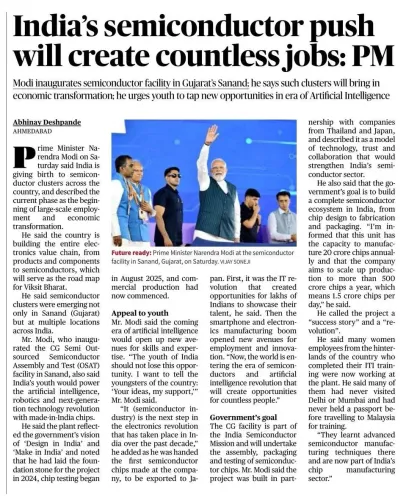
Micron Technology's assembly, testing, marking and packaging plant in Sanand, Gujarat received Cabinet approval in 2023 as India's first major semiconductor facility.
The Production Linked Incentive (PLI) scheme for semiconductors complements the ISM by attracting global investment and reducing import dependence.
The broader push is part of Atmanirbhar Bharat , aimed at securing critical technology supply chains amid global chip shortages.
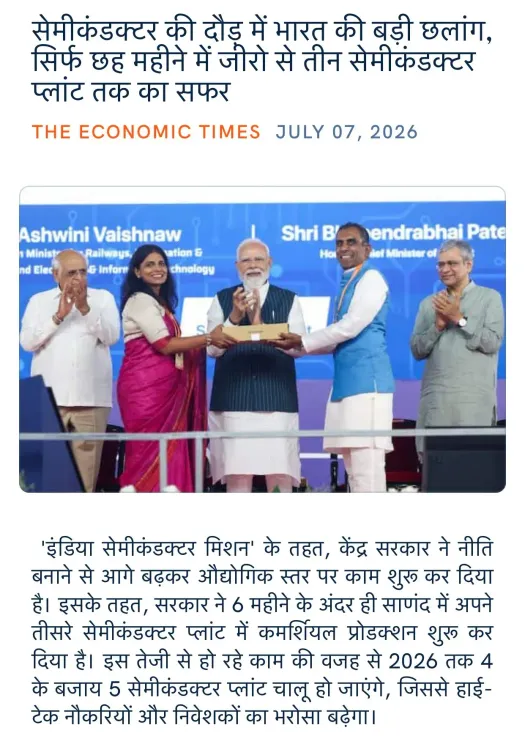
Union Textiles Minister Giriraj Singh on Tuesday, 7 July 2026 shared a post on X highlighting what he described as a landmark stride in India's semiconductor manufacturing journey — from zero to three operational or approved plants in just six months.
Sharing the post via the NaMo App, Singh cited the headline: 'सेमीकंडक्टर की दौड़ में भारत की बड़ी छलांग, सिर्फ छह महीने में जीरो से तीन सेमीकंडक्टर प्लांट तक का सफर' — translating broadly as 'India's big leap in the semiconductor race, a journey from zero to three semiconductor plants in just six months.'
Context
India has been aggressively pursuing semiconductor self-reliance as a strategic priority under the Atmanirbhar Bharat framework. The government launched the India Semiconductor Mission (ISM) in December 2021 with an outlay of Rs 76,000 crore under the Ministry of Electronics and Information Technology, aiming to build a domestic chip manufacturing and display ecosystem from the ground up.
The mission was conceived against the backdrop of severe global chip shortages that disrupted automobile, consumer electronics, and defence supply chains worldwide, and growing anxiety over the concentration of advanced semiconductor production in Taiwan and China.
Policy Backdrop
The Production Linked Incentive (PLI) scheme for semiconductors and electronics, announced in 2021, was designed to attract global investments and reduce India's heavy import dependence on chips. The Cabinet approved three semiconductor projects under the ISM framework, including a major assembly, testing, marking and packaging facility by Micron Technology — a leading US chipmaker — in Sanand, Gujarat, which received Cabinet clearance in 2023 and is widely regarded as India's first significant semiconductor facility.
State governments have played a complementary role, offering land, power, and water support to make these projects viable alongside the central fiscal incentives. The combined centre-state model has been central to ISM's pitch to global chip companies looking to diversify away from Asia's existing hubs.
Stakeholders and Impact
The semiconductor push has direct implications for a wide range of industries. Electronics manufacturers, automobile companies, defence suppliers, and consumer goods firms all depend on a reliable domestic chip supply to insulate themselves from future global shortages and currency-driven import cost pressures.
For state governments hosting the plants — particularly Gujarat — the projects represent high-value industrial investment, skilled employment, and infrastructure development. Analysts have noted that even assembly and packaging facilities, while not at the cutting edge of chip fabrication, represent a necessary first step in building the human capital and supply-chain ecosystem required for more advanced manufacturing over time.
Singh's amplification of this milestone, though he leads the Textiles Ministry rather than Electronics, underscores the cross-cutting political importance the ruling BJP attaches to the semiconductor narrative as a symbol of India's industrial ambition under Prime Minister Narendra Modi.
What's Next
The immediate focus will be on the operational commencement of the approved semiconductor facilities and any further project approvals the India Semiconductor Mission may announce in coming quarters. Observers will watch whether India can move beyond assembly and packaging toward front-end wafer fabrication — a far more capital-intensive and technologically demanding step — as the true test of the mission's long-term ambitions.
If India sustains this pace of approvals and moves toward actual chip production at scale, it could meaningfully alter the country's position in global technology supply chains over the next decade.
Point of View
And each plant approval is being leveraged as proof of the Atmanirbhar Bharat doctrine delivering tangible results. The six-month framing is politically potent: it signals momentum and urgency in a domain where India has historically lagged far behind China, Taiwan, and South Korea. The real test, however, lies in moving from assembly and packaging toward front-end fabrication — a transition that will define whether India becomes a genuine node in global semiconductor supply chains or remains at the lower-value end of the production hierarchy.
NationPress
7 Jul 2026
Frequently Asked Questions
What is the India Semiconductor Mission?
The India Semiconductor Mission is a government initiative launched in December 2021 under the Ministry of Electronics and IT with an outlay of Rs 76,000 crore to develop a domestic semiconductor manufacturing and display ecosystem in India.
How many semiconductor plants does India have now?
According to the post shared by Giriraj Singh on 7 July 2026 , India has reached three semiconductor plants from zero within six months, though the exact operational status of each facility may vary.
What is Micron Technology's role in India's semiconductor push?
Micron Technology , a leading US chipmaker, received Cabinet approval in 2023 to set up an assembly, testing, marking and packaging plant in Sanand, Gujarat — India's first major semiconductor facility under the India Semiconductor Mission.
What is the PLI scheme for semiconductors?
The Production Linked Incentive (PLI) scheme for semiconductors was announced in 2021 to attract global investment into chip manufacturing in India and reduce the country's dependence on imported semiconductors.
Why is semiconductor manufacturing important for India?
Semiconductor manufacturing is critical for India's electronics, automobile, and defence sectors, and is central to the Atmanirbhar Bharat goal of securing domestic supply chains against global chip shortages and reducing reliance on production concentrated in Taiwan and China .