Haryana CM Office Announces Key Horticulture Innovation Push
Synopsis
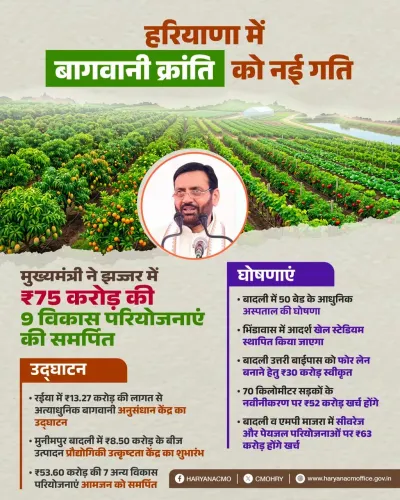
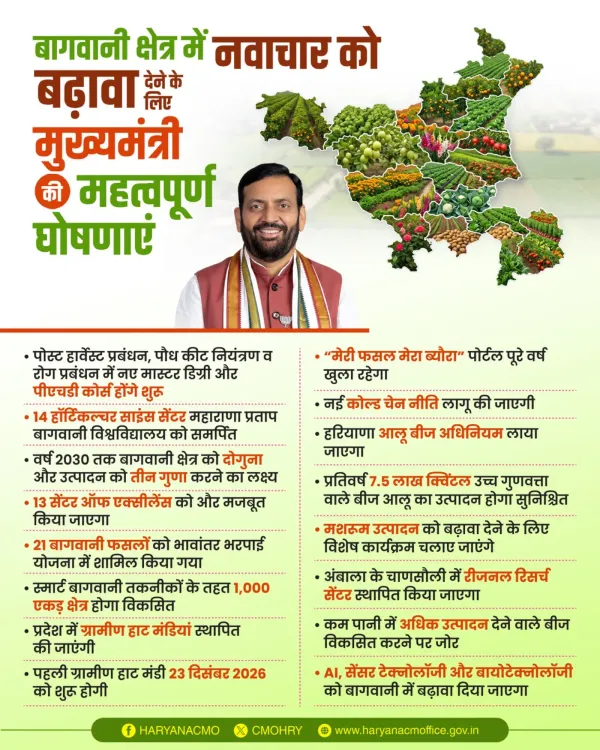
The Chief Minister's Office of Haryana on 28 May 2026 announced major initiatives to promote innovation in the horticulture sector, reinforcing the state's push to diversify agriculture beyond wheat and paddy and raise farmer incomes.
Key Takeaways
The Chief Minister's Office of Haryana announced key measures on 28 May 2026 to promote innovation in the horticulture sector.
Haryana has been pursuing crop diversification to reduce dependence on water-intensive wheat and rice cultivation.
The initiative aligns with the National Horticulture Mission , launched in 2005-06 , and the broader MIDH framework.
Primary beneficiaries include horticulture farmers and agri-entrepreneurs across the state.
Haryana's proximity to Delhi-NCR urban markets gives its horticulture producers a significant logistical edge.
Detailed implementation guidelines and budget allocations from the Haryana Horticulture Department are expected to follow.
The Chief Minister's Office of Haryana on Thursday, 28 May 2026 announced significant initiatives aimed at promoting innovation in the state's horticulture sector, signalling a fresh policy push to diversify agriculture beyond the traditional wheat-paddy belt.
Context
The post, shared from the official CMO Haryana account, carried the headline: 'Baagvaani kshetra mein navaachaar ko badhaava dene ke liye mukhyamantri ki mahatvapoorn ghoshnaayein' — translated as 'Chief Minister's important announcements to promote innovation in the horticulture sector.' The announcement underscores the state government's intent to position Haryana as a leader in high-value crop cultivation and agri-entrepreneurship.
Haryana, a northern state bordering Delhi, has long been synonymous with wheat and rice production. However, intensive cultivation of these water-intensive crops has placed significant stress on the state's groundwater reserves, prompting successive administrations to explore crop diversification as a strategic priority.
Policy Backdrop
The current push aligns with a broader national framework. The National Horticulture Mission (NHM), launched in 2005-06, was designed to boost production and productivity of horticultural crops through area expansion, technology adoption, and infrastructure support across participating states, including Haryana.
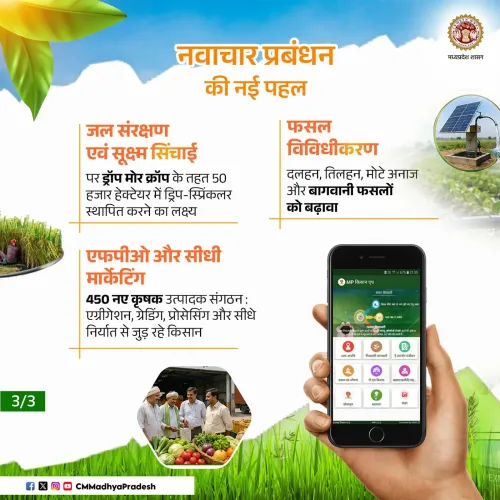
Under the Mission for Integrated Development of Horticulture (MIDH), Haryana has progressively introduced micro-irrigation systems, protected cultivation techniques such as polyhouses and net houses, and post-harvest cold-chain infrastructure. These investments have gradually shifted a section of the farming community toward fruits, vegetables, and floriculture, which offer higher per-acre returns compared to cereal crops.
The state's geography — with access to large urban markets in Delhi-NCR — gives Haryana's horticulture producers a natural logistical advantage, making innovation in this sector particularly consequential for farmer incomes.
Stakeholders and Impact
The primary beneficiaries of horticulture innovation policies are the state's farming households and agri-entrepreneurs who have already transitioned, or are considering transitioning, away from cereal monoculture. Enhanced support for innovation could translate into better access to quality planting material, modern cultivation techniques, and market linkages.
Agri-entrepreneurs and start-ups operating in post-harvest processing, cold storage logistics, and precision farming also stand to benefit if the announced measures include infrastructure incentives or technology subsidies. Groundwater conservation, an increasingly urgent concern in Haryana, would receive an indirect boost as horticulture crops generally require less water than paddy cultivation.
What's Next
Observers will closely watch the rollout details of any new state horticulture policy, specific budget allocations, and the establishment of pilot innovation clusters in the coming months. The announcements made by the Chief Minister's Office are expected to be followed by departmental notifications and implementation guidelines from the Haryana Horticulture Department.
If the state follows through with dedicated funding and institutional support, the initiative could serve as a model for other agriculturally dominant states seeking to balance food security with ecological sustainability and improved farmer livelihoods.
Point of View
Which faces acute groundwater depletion, the political calculus is clear: diversification is both an economic and an environmental imperative. The move also signals alignment with central government priorities under MIDH, potentially unlocking additional federal co-funding. Whether the announcements translate into measurable on-ground change will depend on the specificity of implementation and the depth of institutional support extended to small and marginal farmers.
NationPress
11 Oct 2026
Frequently Asked Questions
What did the Haryana Chief Minister announce for horticulture?
The Chief Minister's Office of Haryana announced important measures on 28 May 2026 to promote innovation in the horticulture sector, aimed at diversifying the state's agriculture and supporting farmers and agri-entrepreneurs.
What is the National Horticulture Mission and how does it relate to Haryana?
The National Horticulture Mission was launched in 2005-06 by the central government to boost production and productivity of horticultural crops. Haryana is a participating state and has used the mission's framework to introduce micro-irrigation and protected cultivation.
Why is Haryana focusing on horticulture instead of wheat and rice?
Haryana's traditional wheat and paddy cultivation is water-intensive and has strained the state's groundwater reserves. Horticulture crops generally require less water and offer higher per-acre returns, making diversification a priority for farmer incomes and ecological sustainability.
Who benefits from Haryana's horticulture innovation policy?
The primary beneficiaries are horticulture farmers and agri-entrepreneurs in Haryana, along with businesses in post-harvest processing, cold storage, and precision farming that may receive infrastructure incentives or technology support.
What should we watch for after this Haryana horticulture announcement?
Key developments to track include the release of detailed policy notifications, specific budget allocations from the Haryana Horticulture Department, and the launch of any pilot innovation clusters in the state.