Jal Shakti Minister Paatil hails ₹6,154 cr JJM 2.0 fund release
Synopsis
Union Jal Shakti Minister C. R. Paatil announced on 6 August 2026 that ₹5,289.09 crore will be reimbursed to 10 states and ₹865.87 crore released via SNA-SPARSH to 13 states under Jal Jeevan Mission 2.0, totalling over ₹6,154 crore to accelerate rural tap water coverage.
Key Takeaways
₹5,289.09 crore in central reimbursement released to 10 states for FY 2026-27 under Jal Jeevan Mission 2.0.
A separate ₹865.87 crore disbursed to 13 states via the SNA-SPARSH direct-transfer mechanism.
Combined release totals ₹6,154.96 crore across 23 state-level pipelines .
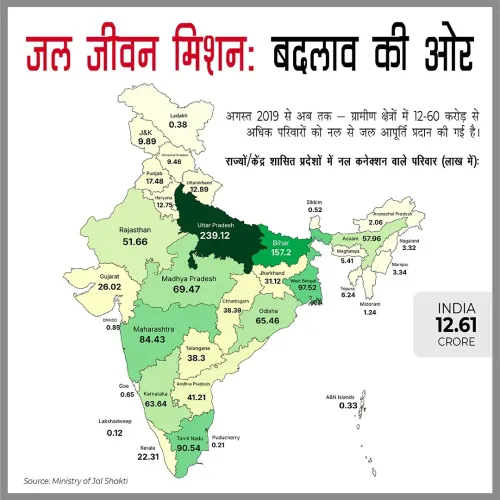
Jal Jeevan Mission was originally launched in August 2019 to provide individual household tap connections in rural India.
SNA-SPARSH routes funds through Single Nodal Accounts to reduce disbursement delays and improve spending velocity.
State-wise utilisation and updated coverage data will be the key metric to watch in subsequent quarterly reports.
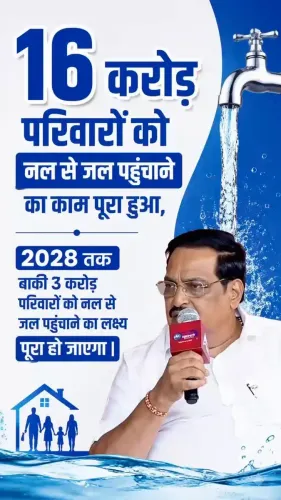
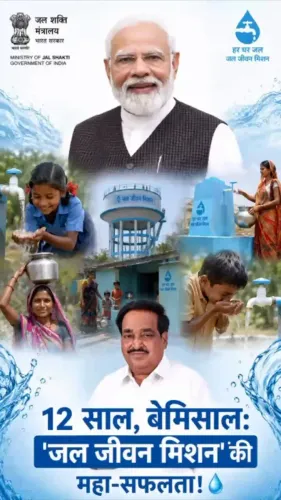
Over ₹6,154 crore is flowing to states for tap water — and Union Jal Shakti Minister C. R. Paatil wants every Indian to know it. On Thursday, 6 August 2026, Paatil took to X to announce a twin-channel central fund release under Jal Jeevan Mission 2.0, crediting Prime Minister Narendra Modi's 'visionary leadership' for the momentum.
In the post, Paatil announced that 10 states will receive a reimbursement of central assistance worth ₹5,289.09 crore for financial year 2026-27, while a separate tranche of ₹865.87 crore is being released to 13 states through the SNA-SPARSH mechanism — a digital direct-transfer system designed to cut delays between sanction and ground-level spending. Together, the two releases add up to ₹6,154.96 crore directed at the mission's core promise: a functional tap connection in every rural home.
What Jal Jeevan Mission 2.0 is building on
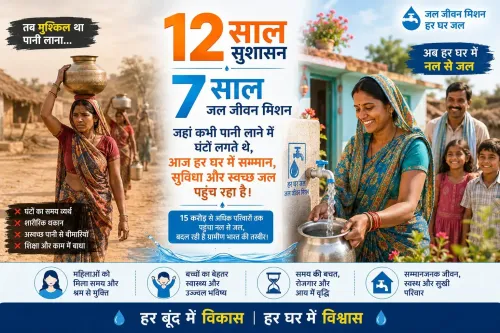
The original Jal Jeevan Mission was launched by Prime Minister Modi in August 2019 with a single, measurable goal — piped, potable water to every rural household in India. The scheme marked a structural shift: instead of community water points, the target became individual household tap connections (har ghar jal, or 'water in every home'). States were made co-investors, with central funds released in tranches tied to utilisation and coverage data. Jal Jeevan Mission 2.0 carries that architecture forward, with Paatil's ministry at the helm. The SNA-SPARSH route — routing funds directly through Single Nodal Accounts — is meant to ensure money reaches executing agencies faster, reducing the float that historically slowed rural infrastructure rollouts.States in the frame, crores on the move
The dual-channel structure of today's release is deliberate. The reimbursement route rewards states that have already spent and submitted utilisation certificates; the SNA-SPARSH tranche pushes fresh liquidity to states still scaling up. Between the two, 23 state-level pipelines are now receiving fresh central oxygen — a signal that the Centre is actively managing pace, not just approving budgets. For rural households across these states, the downstream impact is straightforward: more contracts tendered, more pipelines laid, more connections commissioned. The mission's own tracking infrastructure monitors coverage at the village level, making this one of the more data-visible welfare programmes in the government's portfolio. The kicker: with ₹6,154 crore now in motion across 23 states, the question is no longer whether the Centre is committed — it is whether state execution machinery can spend at the pace the mission demands.Point of View
Where fiscal incentives are being used as a pacing tool rather than a blanket grant. Paatil's public acknowledgment of PM Modi fits the BJP's established pattern of attributing flagship scheme milestones upward to the prime ministerial brand, reinforcing the political ownership of welfare infrastructure ahead of state election cycles. The SNA-SPARSH mechanism signals a broader administrative push to digitise fund flows and reduce leakage, echoing the Direct Benefit Transfer logic applied to other central schemes. The real test, as the ministry's own watchers note, lies in whether state execution agencies can absorb and deploy capital at the pace the mission's coverage targets demand.
NationPress
6 Aug 2026
Frequently Asked Questions
What is Jal Jeevan Mission 2.0?
Jal Jeevan Mission 2.0 is the continuation of the central government scheme launched in August 2019 to provide functional household tap connections for safe drinking water in every rural home across India, now in its second phase with enhanced funding and implementation frameworks.
How much money has been released under JJM 2.0 in August 2026?
Union Jal Shakti Minister C. R. Paatil announced a combined release of ₹6,154.96 crore — ₹5,289.09 crore reimbursed to 10 states and ₹865.87 crore released to 13 states via SNA-SPARSH — on 6 August 2026.
What is SNA-SPARSH in the context of Jal Jeevan Mission?
SNA-SPARSH is a digital fund-transfer mechanism that routes central scheme money directly through Single Nodal Accounts to state executing agencies, designed to reduce delays between sanction and actual ground-level spending.
Which states received funds under Jal Jeevan Mission 2.0 in August 2026?
Paatil's announcement referenced 10 states receiving reimbursement of ₹5,289.09 crore and 13 states receiving ₹865.87 crore via SNA-SPARSH, though the specific state names were not listed in the post.
Who is C. R. Paatil and what is his role in Jal Jeevan Mission?
C. R. Paatil is the Union Minister of Jal Shakti and a senior BJP leader and former Gujarat BJP state president. As Jal Shakti Minister, he oversees the implementation of Jal Jeevan Mission and other national water schemes.