Jal Shakti Minister Paatil hails Varanasi notebook drive
Synopsis
Union Jal Shakti Minister C. R. Paatil on 27 June 2026 lauded a Varanasi initiative distributing water-conservation notebooks to school students, framing it as evidence that conservation culture is taking root in India's youth under PM Modi's leadership.
Key Takeaways
Paatil , Union Minister of Jal Shakti, praised a water-conservation notebook distribution drive targeting school students in Varanasi .
The minister described water conservation under PM Narendra Modi as a jan bhagidari ka rashtriya sankalp — a national resolve of people's participation — rather than a mere government campaign.
The Ministry of Jal Shakti , created in May 2019 , has pursued water policy through both infrastructure (Jal Jeevan Mission) and behavioural change (Jal Shakti Abhiyan, Catch the Rain).
The Jal Shakti Abhiyan , launched in July 2019 , is a district-level campaign for water conservation and rainwater harvesting that underpins such grassroots outreach.
The Varanasi initiative positions school children as active messengers of water security, reflecting a policy shift from infrastructure targets to long-term cultural embedding of conservation values.
State-level rollout of water conservation modules in school curricula and updated Jal Shakti Abhiyan district rankings are the key developments to watch next.
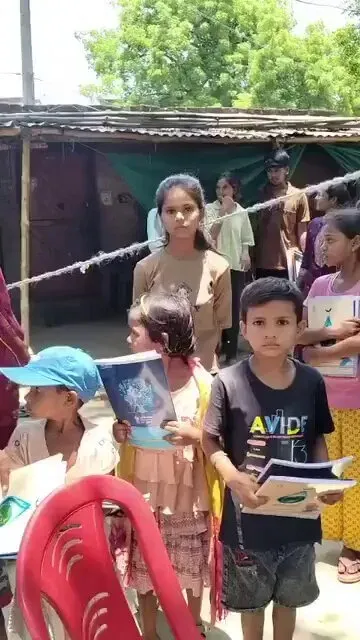
Union Jal Shakti Minister C. R. Paatil on Saturday, 27 June 2026 praised a water conservation awareness initiative in Varanasi in which school students were distributed notebooks carrying water-saving messages, calling it evidence that conservation culture is becoming part of the values of India's new generation.
Context
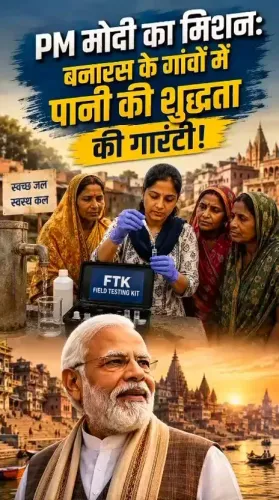
Paatil's post, written in Hindi, describes how water conservation under Prime Minister Narendra Modi has evolved from a government campaign into what he calls a jan bhagidari ka rashtriya sankalp — 'a national resolve of people's participation'. The minister specifically cited the distribution of water-conservation-themed notebooks to students in Varanasi, the Prime Minister's own Lok Sabha constituency, as a concrete expression of that philosophy.
Paatil highlighted a young girl named Pooja Patel as a symbol of this grassroots awareness, stating that when children understand the message of saving water and carry it to others, a strong foundation for water security is built. The reference to Varanasi underscores the symbolic weight the ruling dispensation places on educational outreach in the constituency most closely associated with the Prime Minister.
Policy Backdrop
The Ministry of Jal Shakti, formed in May 2019 by merging the earlier Water Resources and Drinking Water and Sanitation ministries, has anchored India's water policy around two pillars: infrastructure delivery through the Jal Jeevan Mission and behavioural change through campaigns such as the Jal Shakti Abhiyan. The Abhiyan, launched in July 2019, was designed as a time-bound, district-level campaign for water conservation and rainwater harvesting.
The Catch the Rain initiative, introduced in 2020, further expanded the campaign's reach by encouraging the creation of rainwater harvesting structures across districts. Together, these programmes represent a deliberate policy shift from purely infrastructure-led targets to long-term cultural embedding of conservation practices — a shift that school-level notebook drives in constituencies like Varanasi are designed to reinforce.
Stakeholders and Impact
The primary beneficiaries of such awareness drives are school children who serve both as direct recipients of conservation messaging and as conduits to their households and communities. State water departments are expected to align local educational interventions with the broader national framework set by the Jal Shakti Ministry.
For rural households — the core target group of the Jal Jeevan Mission — peer-to-peer messaging carried home by children can reinforce the behavioural dimension of water security that infrastructure alone cannot achieve. The minister's framing of young students as active participants in India's Viksit Bharat ('Developed India') journey signals an intent to institutionalise conservation as a civic value rather than a seasonal campaign.
What's Next
Observers of water policy will watch whether similar notebook or school-curriculum interventions are scaled to other districts and states, and whether the Jal Shakti Abhiyan releases updated district-level rankings that include educational outreach metrics. The broader question is whether school-level awareness translates into measurable shifts in water usage patterns at the household level — a metric the ministry has not yet publicly standardised. If the Varanasi model is formalised into a replicable module, it could mark a meaningful expansion of the mission's scope beyond tap-water infrastructure into civic education.
Point of View
The minister ties a routine awareness activity to the government's flagship development brand. The emphasis on children as carriers of the conservation message is also strategically significant: it shifts the accountability for water security from the state to citizens at the earliest stage of socialisation, deflecting scrutiny from infrastructure delivery gaps. Whether this rhetorical shift is matched by measurable outcomes — such as curriculum integration or district-level behavioural data — will determine its lasting policy significance.
NationPress
27 Jun 2026
Frequently Asked Questions
What did Jal Shakti Minister CR Paatil say about the Varanasi notebook drive?
Minister C. R. Paatil said that distributing water-conservation-themed notebooks to school students in Varanasi reflects the idea that water conservation under PM Modi has become a national resolve of people's participation, not merely a government campaign.
What is the Jal Shakti Abhiyan?
The Jal Shakti Abhiyan is a time-bound, district-level water conservation and rainwater harvesting campaign launched in July 2019 by the Ministry of Jal Shakti as part of India's broader water security push.
What is the Jal Jeevan Mission?
The Jal Jeevan Mission is a flagship central scheme announced in the 2019 Union Budget aimed at providing tap water connections to every rural household in India, with the Ministry of Jal Shakti as the nodal body.
Why was the notebook distribution held in Varanasi?
Varanasi is Prime Minister Narendra Modi's Lok Sabha constituency, making it a symbolically significant location for showcasing grassroots water conservation awareness initiatives linked to his government's policy agenda.
How does the government plan to embed water conservation in school education?
The Jal Shakti Ministry has encouraged school-level awareness drives such as notebook distributions carrying conservation messages, with observers watching for formal integration of water conservation modules into state school curricula as a next step.