Kejriwal Questions Petrol Price as Crude Falls to $70/Barrel
Synopsis
AAP convenor Arvind Kejriwal on 9 July 2026 demanded that petrol prices be reduced to ₹82 per litre, arguing that a fall in global crude oil from $115 to $70 per barrel has not been passed on to Indian consumers, putting pressure on the central government to cut excise duties.
Key Takeaways
AAP convenor Arvind Kejriwal posted on 9 July 2026 demanding lower petrol prices for Indian consumers.
He cited a fall in global crude oil from $115 per barrel to $70 per barrel as justification for a price reduction.
Kejriwal stated petrol should be priced at ₹82 per litre in India.
Central excise and state VAT together can account for over 50% of India's retail petrol price, cushioning it from crude swings.
The last major central excise cut was in May 2022 — ₹8 per litre on petrol — during a period of surging global crude.
The Delhi government under AAP had cut VAT on petrol from 30% to 20% in 2022.
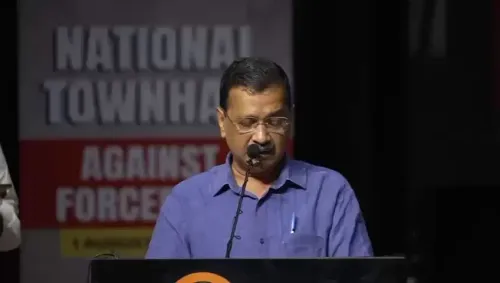
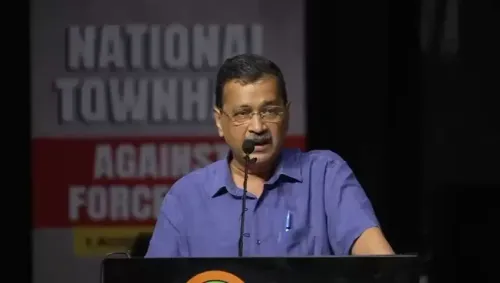
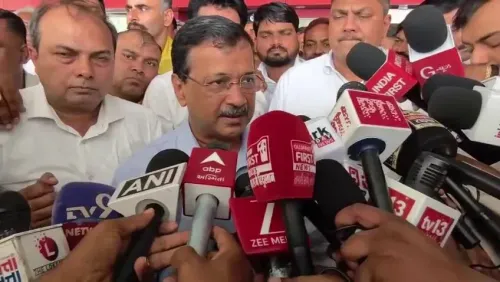
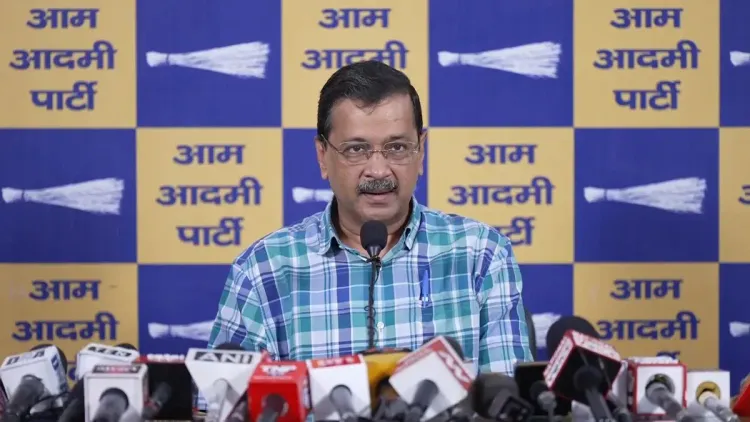
AAP convenor Arvind Kejriwal on Thursday, 9 July 2026 publicly challenged the central government over retail petrol prices, arguing that a sharp fall in global crude oil rates has not been passed on to Indian consumers and that petrol should cost no more than ₹82 per litre.
Posting in Hindi on X, Kejriwal asked: 'जब कच्चे तेल की कीमत $115/बैरल से गिरकर $70/बैरल आ चुकी है, तो फिर देश में पेट्रोल के दाम कम क्यों नहीं हुए?' ('When crude oil prices have fallen from $115 per barrel to $70 per barrel, why have petrol prices in the country not come down?'). He stated plainly that the fair retail price for petrol in India should be ₹82 per litre.
Context
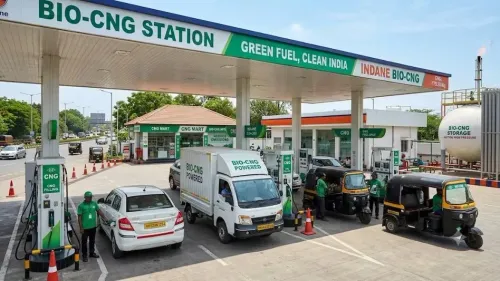
India imports a large share of its crude oil requirements, making global price movements directly relevant to domestic fuel costs. However, the final retail price of petrol in India is shaped not just by crude rates but by a layered structure of central excise duty, state VAT, dealer commissions, and refining margins — components that have historically kept retail prices elevated even when crude softens.
Fuel pricing was deregulated in 2010, giving oil marketing companies the authority to revise prices daily in line with market signals. In practice, revisions have often lagged behind crude movements, particularly downward adjustments.
Policy Backdrop
The last major central intervention came in May 2022, when the government cut excise duty on petrol by ₹8 per litre and on diesel by ₹6 per litre as global crude prices surged. The Delhi government, then led by Kejriwal's Aam Aadmi Party, had separately reduced VAT on petrol from 30% to 20% in 2022, bringing local retail prices below the national average in many comparisons.
Analysts tracking Indian fuel economics note that central excise and state VAT together can account for more than half the final retail price, insulating it from crude oil swings in both directions. Successive governments have cited revenue requirements — funding infrastructure, subsidies, and welfare schemes — as justification for maintaining duty levels even as crude declines.
Stakeholders and Impact
Vehicle owners, transport operators, and logistics companies are the most directly affected by retail petrol and diesel prices. For millions of middle-class and lower-income households that depend on two-wheelers for daily commuting, even a modest per-litre reduction translates into meaningful monthly savings.
State governments also have a stake: VAT on fuel is a significant revenue source, and any coordinated price reduction — whether through central excise cuts or state VAT waivers — requires a fiscal trade-off. The Ministry of Petroleum and Natural Gas oversees the policy framework within which oil marketing companies operate, and any formal revision to excise duties would require action by the Union Finance Ministry.
What's Next
Kejriwal's post is likely to intensify opposition pressure on the central government ahead of the next Union Budget session, where duty rationalisation on fuel has been a recurring demand. A formal response from the Petroleum Ministry on whether any pricing revision or excise adjustment is under consideration will be closely watched.
If global crude remains at or below $70 per barrel, the arithmetic gap between import costs and retail prices will become increasingly difficult for the government to defend publicly, particularly with state assembly elections on the horizon in several large states.
Point of View
A structural feature that governments of all stripes have exploited for revenue. For AAP, which has built its identity around cost-of-living relief and direct welfare, fuel pricing is an evergreen issue that resonates with urban middle-class and working-class voters simultaneously. The ₹82 per litre figure, whether or not independently verified, anchors public expectations and forces the government to either justify the gap or act — both outcomes that serve the opposition's political interest.
NationPress
8 Oct 2026
Frequently Asked Questions
Why has petrol price not decreased even though crude oil is cheaper?
India's retail petrol price includes central excise duty, state VAT, dealer margins, and refining costs — components that can exceed 50% of the final price and are not automatically reduced when crude oil falls. The government controls excise duty and must actively decide to cut it to pass savings to consumers.
What is Arvind Kejriwal's demand on petrol prices?
Kejriwal has demanded that petrol be priced at ₹82 per litre in India, arguing that the fall in global crude oil from $115 to $70 per barrel justifies a significant reduction in the retail price.
What is the current petrol price in India?
Retail petrol prices vary by state due to differing VAT rates. Kejriwal's post implies current prices are significantly above ₹82 per litre, with the gap attributed to unchanged central excise and state duties.
Has the Indian government ever cut excise duty on petrol?
Yes. In May 2022, the central government reduced excise duty on petrol by ₹8 per litre and on diesel by ₹6 per litre to provide relief during a period of high global crude prices.
What role does AAP play in fuel pricing in Delhi?
The AAP-led Delhi government reduced VAT on petrol from 30% to 20% in 2022, which lowered retail prices in Delhi relative to many other states. State VAT is the primary lever available to state governments for fuel price relief.