Bhojshala dispute: Half-day bandh shuts Dhar as Hindu groups push for full court order compliance
Synopsis
A half-day bandh brought Dhar's markets to a standstill on 25 August as Hindu organisations alleged that the ASI and local administration are dragging their feet on implementing the Madhya Pradesh High Court's Bhojshala verdict. With a Supreme Court hearing looming on 29 October and the 'Saraswati Lok' project stalled, the dispute is far from settled.
Key Takeaways
Markets in Dhar, Madhya Pradesh remained shut for half a day on 25 August following a bandh call by Hindu organisations over the Bhojshala complex dispute.
Similar closures were reported in Pithampur and Badnawar ; police deployed in strength across the town.
The Madhya Pradesh High Court (Indore Bench) had, in May 2025 , recognised Bhojshala as a temple of Goddess Vagdevi (Saraswati) and granted Hindus the right to worship 365 days a year .
The Supreme Court declined to stay the verdict but directed that Khasra No.
612 be made available for Friday namaz (1 pm–3 pm) and barred new construction on ASI land.
Ashish Goyal of the Hindu Front for Justice alleged the ASI has not clearly demarcated the monument's boundaries or access routes.
The next Supreme Court hearing is scheduled for 29 October .
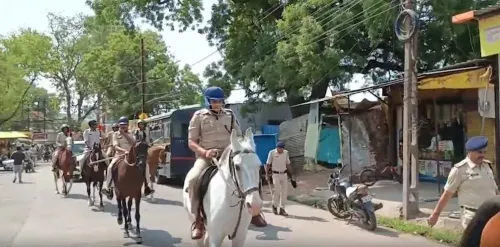
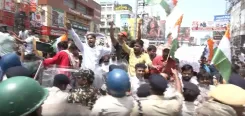
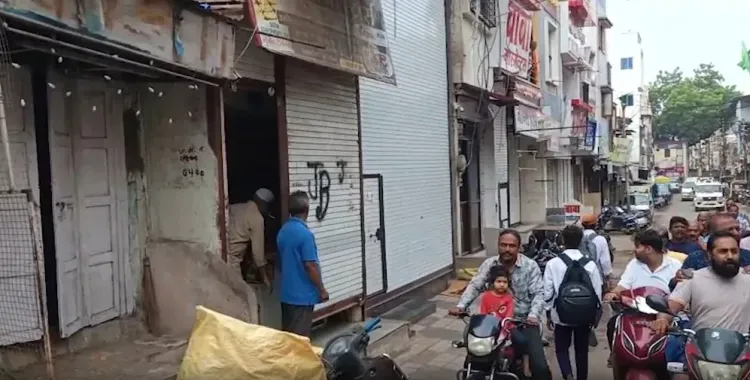
Markets and commercial establishments in Dhar, Madhya Pradesh, remained shut for half a day on Tuesday, 25 August following a bandh call by Hindu organisations protesting the alleged incomplete implementation of court orders related to the Bhojshala complex. Police intensified security deployments across the town as tensions simmered through the morning.
How the Bandh Unfolded
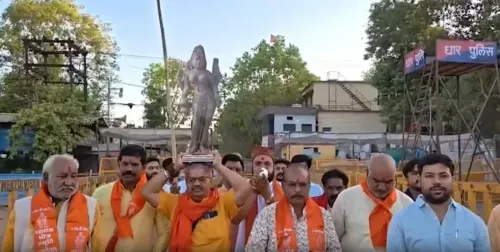
Members of Hindu organisations reached markets early in the morning, urging traders to keep their establishments closed until the afternoon. The shutdown was largely observed across Dhar, with similar half-day closures also reported in nearby areas including Pithampur and Badnawar. Heavy police presence was maintained throughout the town to prevent any untoward incident.
What Hindu Groups Are Demanding
Ashish Goyal, state vice-president of the Hindu Front for Justice, alleged that the Archaeological Survey of India (ASI) and the local administration were not fully implementing the Madhya Pradesh High Court order. He said the actual boundaries, ownership area, and access routes of the protected monument under the Ancient Monuments and Archaeological Sites and Remains Act, 1958, have not been clearly mapped or displayed. The groups are also demanding an end to arrangements for Friday namaz near the complex.
Additionally, Hindu organisations expressed displeasure that the proposed 'Saraswati Lok' project — announced by Chief Minister Mohan Yadav — has not progressed, reportedly due to the Supreme Court's directions restricting construction on ASI land.
Background: The Legal Battle Over Bhojshala
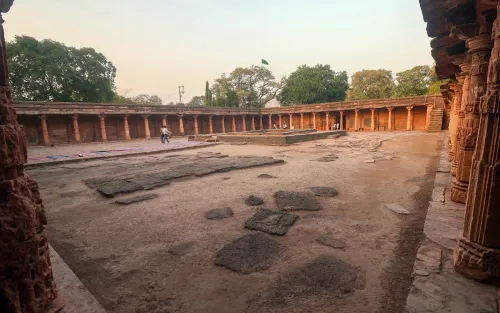
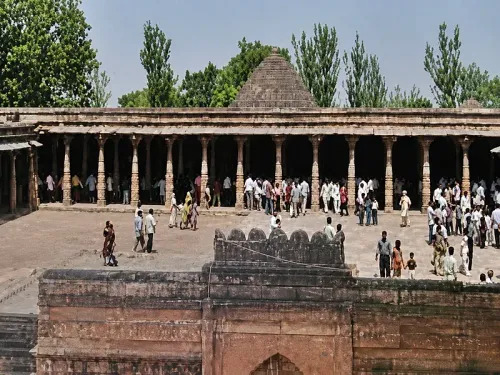
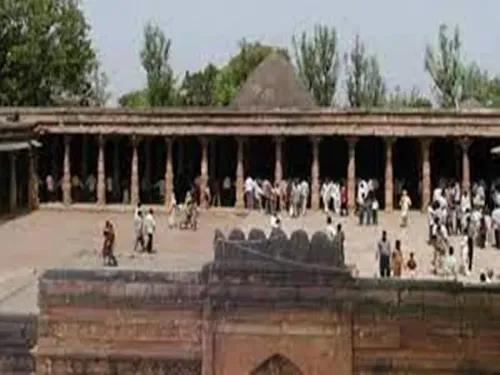
The controversy centres on the historic Bhojshala complex, which has long been a flashpoint between Hindu and Muslim communities. In May 2025, the Indore Bench of the Madhya Pradesh High Court recognised the site as a temple dedicated to Goddess Vagdevi (Saraswati) and granted Hindus the right to worship there 365 days a year. The court also quashed a 2003 ASI order that had restricted Hindu worship to Tuesdays and permitted Muslim namaz on Fridays.
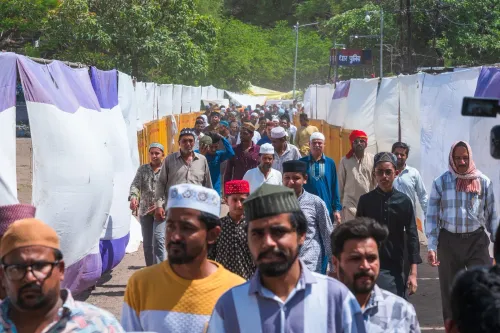
The Supreme Court, while declining to stay the High Court verdict, directed that a suitable open space near the complex — identified as Khasra No. 612 — be made available for Friday namaz between 1 pm and 3 pm. The apex court also ordered the ASI to maintain status quo at the monument and barred any construction without its prior permission.
What Happens Next
The next Supreme Court hearing on petitions challenging the High Court verdict is scheduled for 29 October. The district administration has been facilitating separate arrangements for both communities on Fridays in compliance with court directions, backed by heavy security deployment. Hindu organisations have indicated they will continue their agitation until their demands regarding boundary demarcation, access routes, and the complete cessation of namaz arrangements linked to the complex are addressed.
Point of View
But the Supreme Court's partial modification — preserving Friday namaz at a designated open space — has given both sides room to claim non-compliance. The stalling of the 'Saraswati Lok' project adds a political dimension that Chief Minister Mohan Yadav cannot easily sidestep ahead of a 29 October apex court hearing. The real risk is that prolonged ambiguity in boundary demarcation becomes a recurring trigger for shutdowns, each one raising the temperature before the next court date.
NationPress
25 Aug 2026
Frequently Asked Questions
Why was a bandh called in Dhar on 25 August 2025?
Hindu organisations called a half-day bandh in Dhar on 25 August 2025 to protest what they described as incomplete implementation of the Madhya Pradesh High Court's order on the Bhojshala complex. They allege the ASI has not clearly demarcated the monument's boundaries and that Friday namaz arrangements near the complex continue in violation of the spirit of the verdict.
What did the Madhya Pradesh High Court rule on the Bhojshala complex?
The Indore Bench of the Madhya Pradesh High Court ruled in May 2025 that the Bhojshala complex is a temple dedicated to Goddess Vagdevi (Saraswati) and granted Hindus the right to worship there 365 days a year. It also quashed a 2003 ASI order that had restricted Hindu worship to Tuesdays and permitted Muslim namaz on Fridays.
What has the Supreme Court said about the Bhojshala dispute?
The Supreme Court declined to stay the High Court verdict but directed that an open space near the complex — Khasra No. 612 — be made available for Friday namaz between 1 pm and 3 pm. It also ordered the ASI to maintain status quo and barred any new construction on the monument's land without its permission.
What is the 'Saraswati Lok' project and why is it stalled?
The 'Saraswati Lok' project is a development initiative announced by Madhya Pradesh Chief Minister Mohan Yadav around the Bhojshala complex. It has reportedly not progressed because the Supreme Court's directions restrict construction on ASI-protected land, pending the outcome of petitions challenging the High Court verdict.
When is the next Supreme Court hearing on the Bhojshala case?
The next Supreme Court hearing on petitions challenging the Madhya Pradesh High Court's Bhojshala verdict is scheduled for 29 October. Hindu organisations have said they will continue their agitation until their demands on boundary demarcation and namaz arrangements are fully addressed.