Nalasopara housing society cuts electricity bills 90% with 25-kW solar system

Synopsis
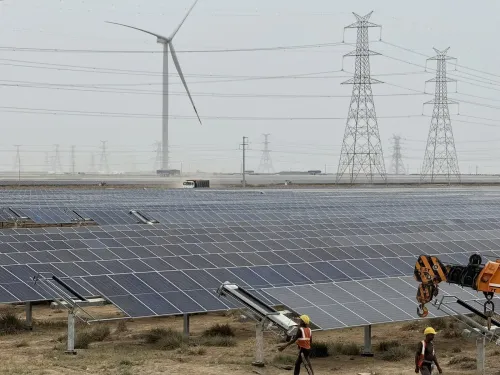
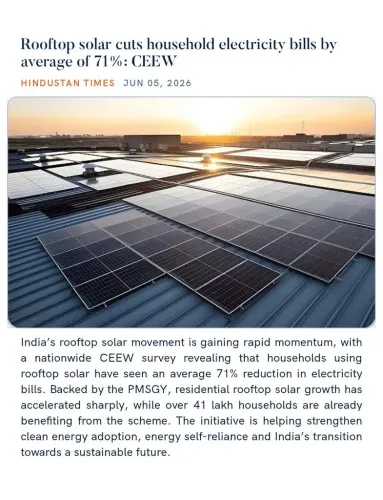
A housing society in Nalasopara East has cut its electricity bills by nearly 90 per cent after installing a 25-kW rooftop solar system and claiming a subsidy under PM SuryaGhar: Muft Bijli Yojana — with the payout arriving within 15 days. It is a small but telling proof-of-concept for India's 500 GW renewable target.
Key Takeaways
Saraswati Heights in Nalasopara East , Maharashtra installed a 25-kilowatt rooftop solar system.
Monthly electricity bills fell by approximately 90 per cent after the system became operational.
Subsidy under the PM SuryaGhar: Muft Bijli Yojana was credited to the society's account within 15 days of installation.
An additional subsidy of roughly 30 per cent significantly reduced the total project cost.
The system was installed within two to three months of vendor finalisation.
Residents are urging other housing societies to adopt rooftop solar under central government schemes.
Saraswati Heights, a housing society in Nalasopara East, Maharashtra, has slashed its monthly electricity bills by nearly 90 per cent after installing a 25-kilowatt solar power system — offering a replicable model for residential communities grappling with rising power tariffs across urban India.
How the Decision Came About
The initiative began roughly a year ago, when society resident Pradeep Mishra and fellow members began researching solar energy options and available central government schemes online. After pooling their findings, the residents collectively resolved to pursue a solar installation rather than continue absorbing escalating grid electricity costs.
The society then evaluated multiple vendors, comparing service quality and project proposals before finalising one. From the point of vendor selection, the 25-kW system was commissioned and made operational within two to three months.
Government Subsidy Under PM SuryaGhar Scheme
A significant factor in making the project financially viable was the PM SuryaGhar: Muft Bijli Yojana, the Centre's flagship rooftop solar scheme. According to Mishra, the subsidy amount was credited directly to the society's bank account within 15 days of installation — a turnaround residents described as unusually swift. An additional subsidy of approximately 30 per cent further reduced the total project outlay, lowering the upfront financial burden on members.
The Savings in Practice
Since the solar system became operational, the society has recorded a consistent drop in electricity expenditure. Monthly bills have fallen by close to 90 per cent compared to pre-installation costs, according to residents. Mishra said the savings have been steady month-on-month, providing financial predictability that the society did not have under variable grid tariffs.
This comes amid a broader national trend of rising power tariffs putting pressure on middle-class households and housing co-operatives, particularly in the Mumbai Metropolitan Region where per-unit electricity costs have climbed over successive tariff revisions.
A Call to Other Societies
Mishra and other residents are now actively encouraging neighbouring housing societies and small-scale consumers to explore the central government's solar scheme. They argue that the combination of subsidy access, falling panel costs, and quick government processing makes the economics compelling even for smaller residential complexes.
Beyond financial savings, residents also highlighted the environmental dimension — reduced dependence on coal-fired grid power translates into a measurable drop in household carbon footprint. Mishra expressed gratitude to the government and Prime Minister Narendra Modi for making the subsidy mechanism accessible and efficient.
With India targeting 500 GW of renewable energy capacity by 2030, community-level adoptions such as this one in Nalasopara represent the grassroots momentum policymakers are counting on to close the gap between installed capacity targets and on-ground deployment.
Point of View
And it passed. A 15-day credit turnaround is genuinely fast by Indian government disbursement standards and, if replicable at scale, removes the single biggest friction point that has historically slowed rooftop solar adoption in housing co-operatives. The deeper question is whether the scheme's administrative capacity holds as uptake grows beyond early adopters. India's 500 GW renewable target by 2030 depends heavily on distributed rooftop generation; if the subsidy machinery jams under volume, the grassroots momentum this story represents could stall just as it begins to matter.
NationPress
2 Nov 2026
Frequently Asked Questions
Which housing society installed the solar system in Nalasopara, and what were the savings?
Saraswati Heights in Nalasopara East, Maharashtra installed a 25-kilowatt rooftop solar system and reported a reduction of approximately 90 per cent in monthly electricity bills. The savings have been consistent since the system became operational.
What is the PM SuryaGhar: Muft Bijli Yojana and how did it help the society?
PM SuryaGhar: Muft Bijli Yojana is the central government's rooftop solar subsidy scheme aimed at reducing electricity costs for households and residential societies. Saraswati Heights received its subsidy within 15 days of installation and an additional approximately 30 per cent subsidy that significantly lowered the total project cost.
How long did it take to install the solar system?
After the society finalised its vendor selection, the 25-kW solar power system was installed and made operational within two to three months. The entire process — from initial research to commissioning — took roughly a year.
Can other housing societies in Maharashtra apply for this scheme?
Yes, the PM SuryaGhar: Muft Bijli Yojana is open to housing societies across India. Residents of Saraswati Heights are actively encouraging neighbouring societies to explore the scheme, citing the swift subsidy processing and strong return on investment from reduced electricity bills.
Why is rooftop solar adoption important beyond individual savings?
Rooftop solar reduces dependence on coal-fired grid electricity, lowering carbon emissions at the household level. At a national scale, distributed rooftop generation is a key pillar of India's target to achieve 500 GW of renewable energy capacity by 2030.