NCERT Class 9 textbook adds Sikh Gurus' history, BJP hails decision
Synopsis
NCERT's new Class 9 Social Science textbook now includes a chapter on Sikh Gurus' resistance against Mughal persecution — a move BJP leaders are celebrating as a correction of decades of 'distorted' history. With Delhi University also adding a Sikh history elective, this signals a broader institutional reorientation of how India's school system frames medieval history and martyrdom.
Key Takeaways
NCERT has included a chapter titled 'Resistance and Resilience (1000–1700 CE)' in its new Class 9 Social Science textbook, covering Sikh Gurus and alleged Mughal atrocities.
BJP Rajya Sabha member Vikramjit Singh Sahney said he had formally demanded the inclusion, alleging earlier textbooks used 'derogatory words' for Guru Tegh Bahadur and Guru Gobind Singh Ji .
Rana Gurmeet Singh Sodhi cited figures including Banda Singh Bahadur , Guru Arjan Dev Ji , and the four Sahibzadas as symbols of Sikh sacrifice for the nation.
BJP spokesperson Pratul Shah Deo called for an additional chapter on Maharaja Ranjit Singh and said earlier depictions of Akbar and Tipu Sultan were 'wrong lessons' taught by Congress.
Delhi University has also reportedly added an elective on Sikh history to its curriculum.
The new textbook is set for nationwide use from the upcoming academic cycle for Class 9 students.
The National Council of Educational Research and Training (NCERT) has announced the inclusion of Sikh Guru history and accounts of alleged Mughal persecution in a new Class 9 Social Science textbook, prompting Bharatiya Janata Party (BJP) leaders on 30 September 2026 to welcome the move as a long-overdue correction to India's official educational narrative. The development centres on a chapter titled 'Resistance and Resilience (1000–1700 CE)' in the book 'Understanding Society: India and Beyond, Social Science Textbook for Grade 9, Part 2', which documents alleged atrocities by Mughal emperors against Sikh Gurus.
What the New Textbook Contains
The newly announced NCERT textbook features a dedicated chapter covering the Sikh Gurus' resistance against Mughal rule between the 10th and 17th centuries. The chapter addresses the martyrdom of figures including Guru Tegh Bahadur, Guru Arjan Dev Ji, Guru Gobind Singh Ji, and his four sons — the Sahibzadas — who, according to the text, refused to convert to Islam and paid with their lives. The notification regarding the inclusion was reportedly issued on the same day BJP leaders made their statements.
What BJP Leaders Said
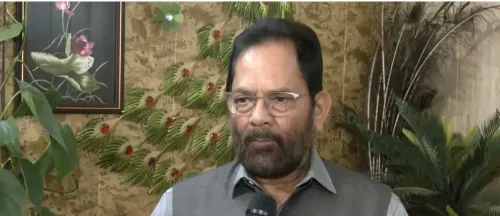
BJP Rajya Sabha member Vikramjit Singh Sahney said he was 'very satisfied' with the decision, noting that he had formally demanded the inclusion after becoming a Member of Parliament, arguing that textbook history had earlier been 'highly distorted.' Sahney specifically alleged that 'derogatory words' had previously appeared in some textbooks in reference to Guru Tegh Bahadur and Guru Gobind Singh Ji. He credited Prime Minister Narendra Modi, the Ministry of Education, and NCERT for the decision, also linking it to the government's earlier move to designate Shaheed Veer Baal Diwas to commemorate the Sahibzadas.
BJP leader Rana Gurmeet Singh Sodhi said people must understand how the Sikh community 'made sacrifices and attained martyrdom to protect the honour and security of this country.' He listed figures including Banda Singh Bahadur, Hari Singh Nalwa, and General Ahluwalia as emblematic of the community's national contribution, and noted the Sikh community's role in the wars of 1962, 1965, 1971, and the Kargil conflict.
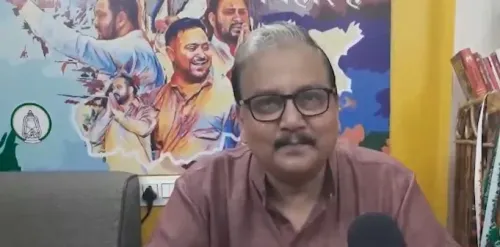
BJP National Spokesperson Guru Prakash Paswan said the official historical narrative had been different for decades and alleged that Congress and Left parties had 'attempted to keep people ignorant about aspects of Indian history.' He also highlighted other historically marginalised voices from the Bhakti movement, including Kabir, Ravidas, Jhalkari Bai, and Janabai, whose histories, he said, remain largely unknown.
BJP spokesperson Pratul Shah Deo called Sikh history 'an important and integral part of Indian history' and argued that a chapter on Maharaja Ranjit Singh should also be included. He described Akbar and Tipu Sultan's earlier depictions in textbooks as 'wrong lessons which the Congress taught,' contending that Mughal rulers were aggressors. Deo said: 'This is the real history. The nation should be aware of the real history.'
Broader Context and Curriculum Shifts
The NCERT revision is part of a larger ongoing overhaul of school curricula that has drawn both praise and scrutiny. Delhi University has also reportedly introduced an elective subject on Sikh history in its curriculum, suggesting a coordinated institutional push. Critics from opposition parties have previously argued that NCERT revisions under the current government reflect a political reorientation of history rather than a purely academic exercise, though BJP leaders contest that framing strongly. This comes amid a wider national conversation about whose histories have been centred — and whose have been marginalised — in India's post-Independence educational framework.
What Comes Next
The textbook is expected to be in use from the upcoming academic cycle for Class 9 students nationwide. BJP leaders have indicated appetite for further revisions, including a chapter on Maharaja Ranjit Singh. Whether opposition parties or academic bodies formally challenge the new content remains to be seen, but the political lines on this debate are already sharply drawn.
Point of View
But the debate it reopens is larger than a single chapter. For decades, the framing of medieval Indian history in school textbooks has been contested terrain — this move represents the most direct institutional intervention yet in that argument. BJP's celebration of the inclusion is consistent, but the rush to also condemn specific historical figures like Akbar and Tipu Sultan in political statements risks conflating legitimate historical recovery with partisan score-settling. The more durable question is whether NCERT's revised framework will survive future government changes, or whether Indian school history will remain a pendulum swinging with each electoral cycle.
NationPress
30 Sept 2026
Frequently Asked Questions
What has NCERT added to the Class 9 Social Science textbook?
NCERT has added a chapter titled 'Resistance and Resilience (1000–1700 CE)' to its new Class 9 Social Science textbook 'Understanding Society: India and Beyond, Social Science Textbook for Grade 9, Part 2.' The chapter covers the history of Sikh Gurus and alleged atrocities by Mughal emperors against them.
Why are BJP leaders welcoming the NCERT decision?
BJP leaders argue that earlier NCERT textbooks distorted or omitted significant aspects of Sikh history, including the martyrdom of Guru Tegh Bahadur, Guru Gobind Singh Ji, and the four Sahibzadas. They credit Prime Minister Narendra Modi and the Ministry of Education for driving the change.
Which Sikh figures are covered in the new NCERT chapter?
According to BJP leaders who have reviewed the development, the chapter includes references to Guru Tegh Bahadur, Guru Arjan Dev Ji, Guru Gobind Singh Ji, the four Sahibzadas, Banda Singh Bahadur, Hari Singh Nalwa, and General Ahluwalia, among others.
Has any other institution made a similar move on Sikh history?
Yes. Delhi University has reportedly introduced an elective subject on Sikh history in its curriculum, which BJP leaders cited as part of a broader effort to bring Sikh contributions into mainstream Indian education.
What further changes have BJP leaders called for in NCERT textbooks?
BJP spokesperson Pratul Shah Deo called for the inclusion of a dedicated chapter on Maharaja Ranjit Singh, describing him as the last sovereign ruler who resisted invaders. He also argued that past depictions of figures like Akbar and Tipu Sultan in textbooks represented historically inaccurate portrayals.