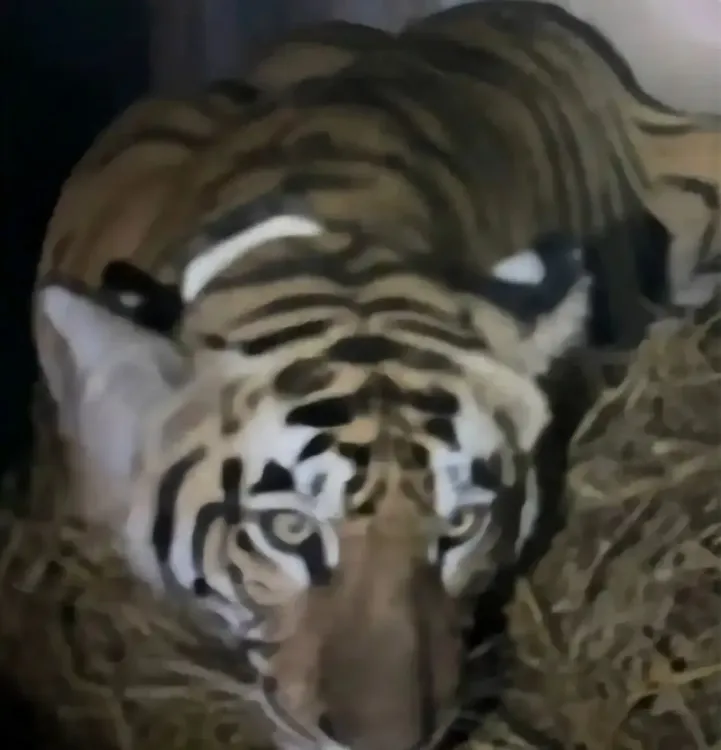
Royal Bengal tigress 'Rani' escapes Buxa Tiger Reserve for second time in days
Synopsis
Just days after a ministerial-led joint operation retrieved tigress 'Rani' from Assam with considerable fanfare, she has escaped Buxa Tiger Reserve a second time — raising hard questions about enclosure security, relocation protocols, and the feasibility of re-establishing tigers in north Bengal's forests.
Key Takeaways
Royal Bengal tigress 'Rani' escaped Buxa Tiger Reserve in Alipurduar , West Bengal, for the second time, confirmed on 9 November 2026 .
She had been retrieved from Assam's Kokrajhar district in a joint Forest Department operation on 3 November , less than five days before her second escape. 'Rani' was originally relocated from Bihar's Valmiki Tiger Reserve , airlifted to Alipurduar by the Indian Air Force on 30 September .
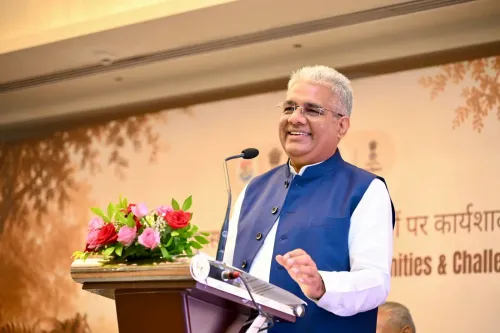
Union Minister Bhupender Yadav had confirmed her release into Buxa jungle on 5 October .
A red alert has been issued and a fresh search operation is underway; her current location is unknown.
The incident raises concerns about enclosure security and the broader tiger repopulation programme in north Bengal.
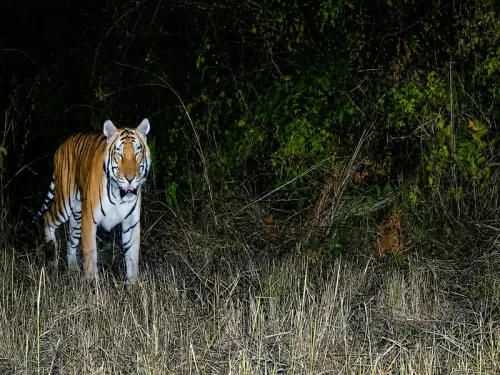
Royal Bengal tigress 'Rani' has escaped from Buxa Tiger Reserve in Alipurduar district, northern West Bengal, for the second time in quick succession, Forest Department officials confirmed on Monday, 9 November 2026. The latest breakout occurred less than five days after a high-profile joint operation brought the tigress back from Assam, raising serious questions about enclosure security and the broader tiger relocation programme in north Bengal.
Background: How 'Rani' Arrived at Buxa
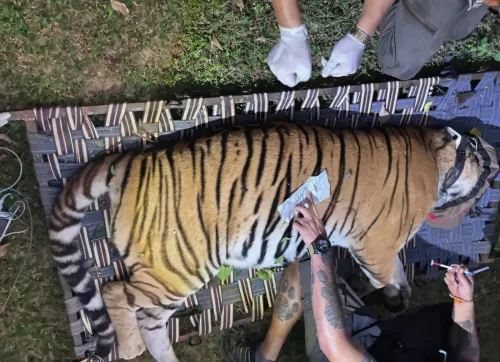
The tigress's journey to Buxa began on 27 September, when the three-year-old Royal Bengal tigress was tranquillised at Bihar's Valmiki Tiger Reserve. She was airlifted to Hasimara Air Force Base in Alipurduar on 30 September aboard an IM-17 helicopter of the Indian Air Force. On landing, two wildlife doctors and tiger experts conducted a thorough physical examination lasting more than an hour before she was transported by road to Buxa Tiger Reserve.
The relocation was part of a government initiative to increase the tiger population in north Bengal and establish a sustainable tiger presence in the Buxa forest ecosystem. Union Minister for Environment, Forest and Climate Change Bhupender Yadav confirmed her release into the jungle on 5 October.
First Escape and Dramatic Retrieval from Assam
Later in October, 'Rani' made her first escape, crossing the Sankosh River to enter Raimona National Park in Assam. Initially, the Forest Department chose not to intervene, treating the movement as natural behaviour. However, concerns mounted over the tigress's proximity to human settlements and the safety of domestic animals.
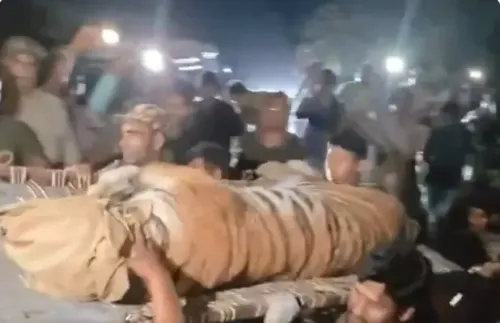
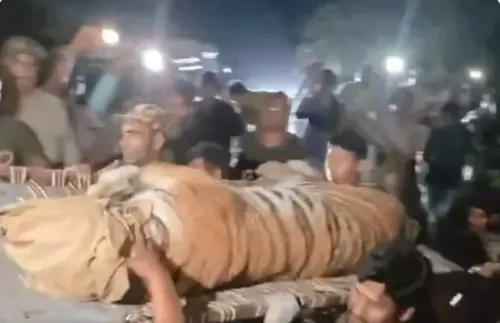
West Bengal's State Forest Minister Manoj Kumar Oraon personally travelled to Assam to coordinate the retrieval. On 3 November, a joint operation by the West Bengal and Assam Forest Departments in Kokrajhar district corralled the tigress using three elephants. After roughly two hours, she was tranquillised, transported back to Alipurduar in a containment box, and placed in an enclosure — an operation described at the time as a success.
Second Escape: Enclosure Breach on Sunday
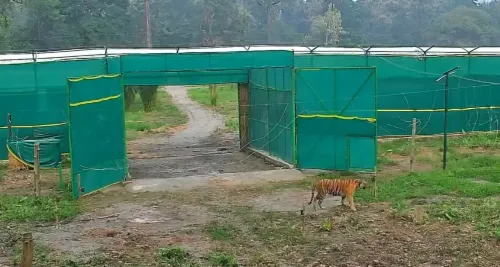
The renewed optimism was short-lived. On Sunday afternoon, 'Rani' broke out of the enclosure once more, evading surveillance. A search operation has been launched and a red alert issued across the region. Forest officials have not yet confirmed her current location.
Notably, this is the second escape within weeks, and both incidents have occurred despite significant state and central government involvement — including ministerial-level intervention and air force logistics — underscoring the operational and ecological challenges of the relocation programme.
What Happens Next
Authorities are conducting active searches, and local communities near the reserve have been alerted. Wildlife experts have previously noted that newly relocated tigers often struggle to adapt to unfamiliar territories, making containment especially difficult in the early months. The repeated escapes are likely to prompt a review of the enclosure infrastructure at Buxa and the protocols governing relocated big cats. The long-term viability of the north Bengal tiger repopulation plan now faces its first major credibility test.
Point of View
Ministerial road trips to Assam, two-hour tranquilliser operations — and the unglamorous groundwork of secure enclosure infrastructure. Newly relocated big cats are known to range widely and resist containment; the Forest Department's decision to place 'Rani' back into the same enclosure after her first escape, without evident reinforcement, appears in retrospect to be an oversight. The deeper question is whether Buxa's ecosystem is genuinely ready to sustain a resident tiger population, or whether the relocation is being driven more by conservation optics than ecological readiness. Without a credible infrastructure audit and an independent behavioural assessment of the tigress, a third escape — or a human-wildlife conflict incident — is a real risk.
NationPress
9 Nov 2026
Frequently Asked Questions
Why did tigress 'Rani' escape Buxa Tiger Reserve?
Forest officials have not yet confirmed the specific cause of either escape. The tigress, a three-year-old Royal Bengal tiger relocated from Bihar's Valmiki Tiger Reserve, broke out of an enclosure on Sunday afternoon, less than five days after being brought back from Assam. Wildlife experts note that newly relocated tigers often resist unfamiliar territories, making early containment especially difficult.
Where was tigress 'Rani' found during her first escape?
During her first escape, 'Rani' crossed the Sankosh River and was traced to Raimona National Park in Assam. West Bengal's Forest Minister Manoj Kumar Oraon personally coordinated her retrieval, and a joint operation in Assam's Kokrajhar district recaptured her on 3 November.
What is the tiger relocation programme at Buxa Tiger Reserve?
The programme aims to increase the tiger population in north Bengal and establish a sustainable tiger presence at Buxa Tiger Reserve. As part of this initiative, 'Rani' was airlifted from Bihar's Valmiki Tiger Reserve to Hasimara Air Force Base on 30 September and subsequently released into the Buxa jungle on 5 October.
What action has been taken after the second escape?
A red alert has been issued across the region and a search operation is actively under way. Forest Department officials confirmed the second escape on Monday, 9 November, but had not disclosed the tigress's location as of that report.
Who is responsible for the tiger relocation at Buxa?
The relocation is a joint effort involving the West Bengal Forest Department, the central government, and the Indian Air Force. Union Minister for Environment, Forest and Climate Change Bhupender Yadav announced the tigress's release into Buxa on 5 October, and State Forest Minister Manoj Kumar Oraon led the retrieval operation from Assam in early November.