Piyush Goyal inaugurates Vanijya Bhawan, Udyog Bhawan in Jaipur in co-location push
Synopsis
Jaipur has become India's first city to bring all Commerce Ministry offices under one roof — and Union Minister Piyush Goyal wants every state capital to follow. With a hard digitisation deadline of 31 March 2027 and a push to end mandatory office visits, the initiative signals a serious attempt to cut compliance friction for exporters, importers and investors nationwide.
Key Takeaways
Piyush Goyal inaugurated Vanijya Bhawan and Udyog Bhawan in Jaipur on 4 November 2026 , the first co-located Commerce Ministry hub in India.
The model covers 500 offices and 46 organisations under the ministry, barring very large campuses like ECGC Mumbai .
All ministry services — licences, permits, SCOMET approvals — must move fully online by 31 March 2027 .
From 1 April 2027 , no citizen or business should need to visit a ministry office in person.
Goyal urged adoption of self-certification and called on departments to break organisational silos for better service delivery.
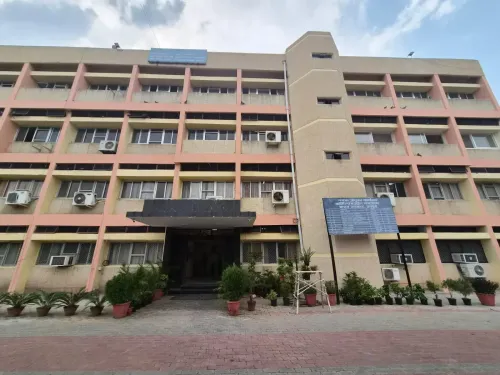
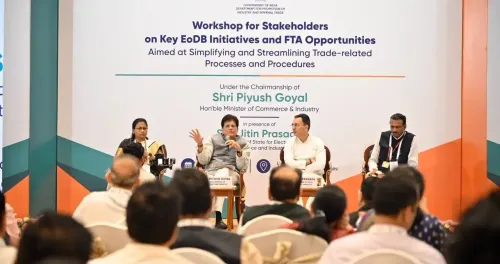
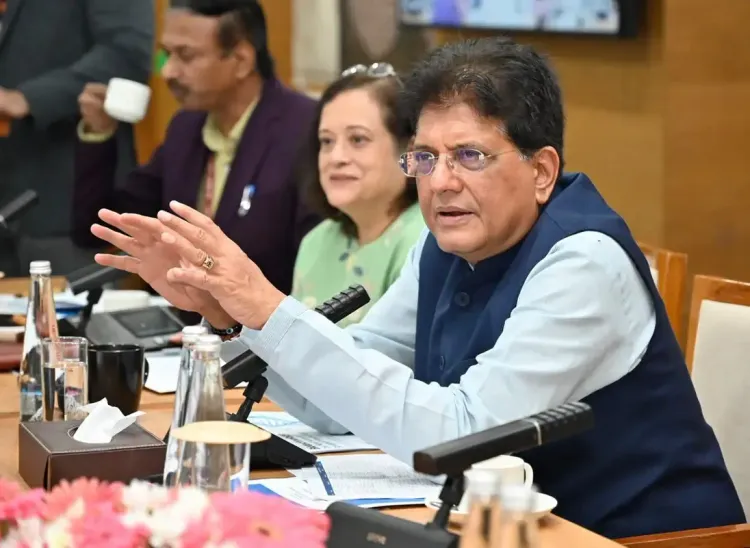
Union Commerce and Industry Minister Piyush Goyal on Wednesday, 4 November 2026, inaugurated Vanijya Bhawan and Udyog Bhawan in Jaipur, making it the first city — and first state capital — to house offices of the Ministry of Commerce and Industry and its affiliated organisations under a single roof. The inauguration marks the formal launch of the ministry's co-location initiative, which the minister has urged to be replicated swiftly across every state capital in the country.
What the Co-location Initiative Means
The two buildings in Jaipur will function as integrated hubs for industry support and international trade, serving as one-stop centres for export promotion, investment facilitation and internal trade activities. According to officials, out of roughly 500 offices and 46 organisations under the ministry, the vast majority — barring very large standalone campuses such as the Export Credit Guarantee Corporation (ECGC) office in Mumbai — are slated for the co-location arrangement.
Notably, Goyal clarified that co-located centres will not be limited to serving only the organisations physically present at a given location; they will facilitate services across all 46 organisations and various departments under the ministry, effectively expanding reach without multiplying infrastructure.
Digitisation Deadline Set for April 2027
At the inauguration, Goyal directed that all processes — including applications for licences and permits, SCOMET approvals, and other trade-related services — be moved entirely online. He set 31 March 2027 as the deadline for completing full digitisation, including the migration of past data and records at Regional Authorities (RAs) of the Directorate General of Foreign Trade (DGFT) across the country.
From 1 April 2027, no individual or business should need to visit a ministry office in person for these services, the minister said. Where physical verification of original documents is unavoidable, Goyal suggested setting up small counters or installing computers at office entrances to enable simultaneous verification and uploading — minimising the compliance burden on citizens and businesses.
Simplification and Trust at the Core
Beyond bricks and bytes, Goyal stressed that the initiative must drive a cultural shift in government service delivery. He called for the simplification of processes, forms and formats, and pushed departments to break organisational silos. The minister specifically encouraged self-certification and a greater degree of trust in stakeholders, saying the government should demonstrate confidence in citizens and businesses rather than defaulting to documentation-heavy verification regimes.
He also called on government offices, state representatives, exporters, importers, investors and businesses to actively participate in rolling out the initiative nationwide.
What Comes Next
With Jaipur as the pilot, the ministry is expected to extend the co-location model to other state capitals in phases. The 31 March 2027 digitisation deadline gives departments roughly 17 months to complete the transition. Industry bodies and trade associations are likely to be consulted as the rollout gathers pace, with the broader goal of reducing friction in doing business and meeting legal compliance obligations.
Point of View
But the harder test lies in the 17-month digitisation sprint that follows. India's trade compliance infrastructure has historically struggled with backend integration — DGFT's regional offices, in particular, carry years of paper-based legacy records that resist quick migration. The self-certification push is the right instinct, but without a clear audit and grievance mechanism, it risks shifting the compliance burden rather than removing it. If the April 2027 deadline holds, this could meaningfully reduce the cost of doing trade in India; if it slips, it joins a long line of well-announced e-governance deadlines that were quietly extended.
NationPress
4 Nov 2026
Frequently Asked Questions
What is Vanijya Bhawan and Udyog Bhawan in Jaipur?
Vanijya Bhawan and Udyog Bhawan are two newly inaugurated buildings in Jaipur that bring together offices of the Ministry of Commerce and Industry and its affiliated organisations under a single location. Inaugurated on 4 November 2026, Jaipur is the first city and state capital in India to adopt this co-location model.
Why is the Jaipur co-location initiative significant?
It is the first instance of Commerce Ministry offices being consolidated in one location, making it a one-stop hub for export promotion, investment facilitation and internal trade services. The model is intended to be replicated across all state capitals, reducing compliance friction for exporters, importers and investors.
What is the digitisation deadline set by Piyush Goyal?
Minister Piyush Goyal has set 31 March 2027 as the deadline for all ministry services — including licences, permits, and SCOMET approvals — to move fully online. From 1 April 2027, no one should need to visit a ministry office in person for these services.
Which organisations are covered under the co-location plan?
Around 500 offices and 46 organisations under the Ministry of Commerce and Industry are covered, with the exception of very large standalone campuses such as the ECGC office in Mumbai. Co-located centres will facilitate services across all 46 organisations, not just those physically present at a given location.
What happens to offices that cannot be physically co-located?
Large campuses such as the ECGC office in Mumbai are exempt from the physical co-location requirement. However, the minister clarified that all co-located centres will still provide access to services across all 46 organisations digitally, ensuring no business is left out of the integrated service delivery model.