Giriraj Singh: India Textiles Gaining Global Edge
Synopsis
Union Textiles Minister Giriraj Singh on 24 June 2026 said India's textile sector is gaining global recognition under PM Modi, citing China's declining market share, the India-UK FTA, the Rs 10,683 crore PLI scheme, and seven PM MITRA parks as pillars of India's rise as a world textile hub.
Key Takeaways
Union Textiles Minister Giriraj Singh declared on 24 June 2026 that India's textile sector is establishing a new global identity under PM Narendra Modi .
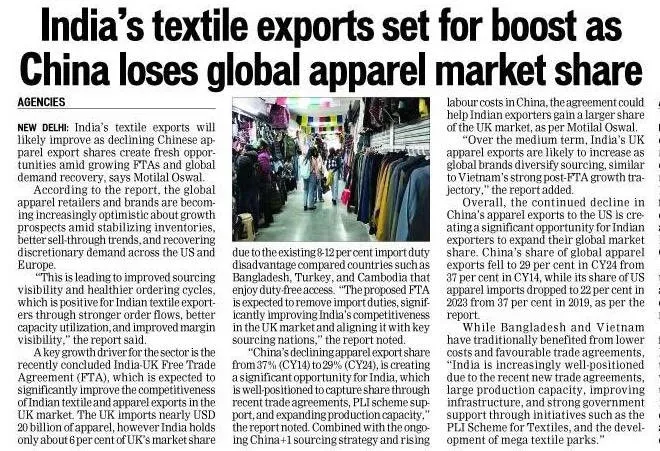
The India-UK Free Trade Agreement and China's declining market share are identified as key factors opening new export opportunities for Indian textiles.
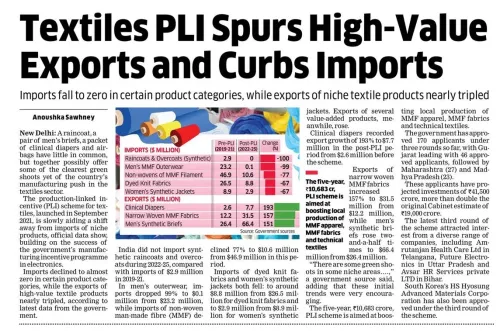
The PLI scheme for textiles carries an outlay of Rs 10,683 crore and targets man-made fibre and apparel manufacturing.
The PM MITRA scheme envisages seven integrated mega textile parks providing end-to-end plug-and-play infrastructure.
The push is framed within the Viksit Bharat 2047 and Aatmanirbhar Bharat policy frameworks, with textiles earmarked as a priority export sector.
Commissioning timelines of PM MITRA parks and quarterly export data will be the key near-term indicators of progress.
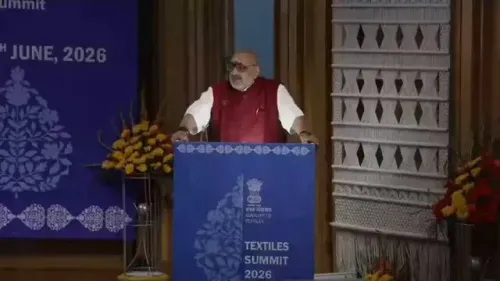
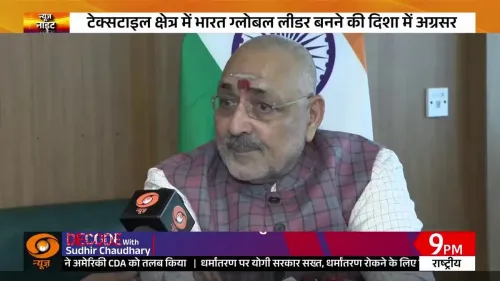
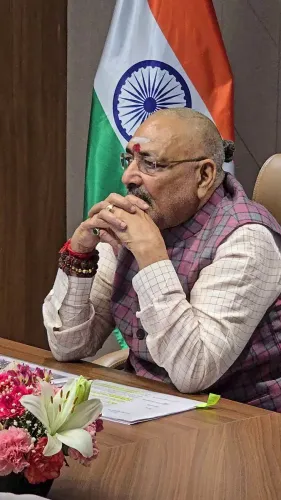
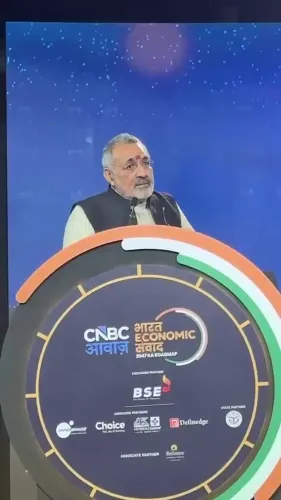
Union Textiles Minister Giriraj Singh on Wednesday, 24 June 2026 highlighted India's rising global profile in the textile sector, citing the India-UK Free Trade Agreement, China's declining market share, and domestic production incentive schemes as key drivers of the country's emergence as a leading textile hub.
Posting on X, the minister wrote: 'माननीय प्रधानमंत्री श्री नरेन्द्र मोदी जी के नेतृत्व में भारत का वस्त्र क्षेत्र वैश्विक स्तर पर नई पहचान बना रहा है' — 'Under the leadership of Prime Minister Narendra Modi, India's textile sector is establishing a new identity on the global stage.' He added that China's shrinking market share and historic steps like the India-UK FTA have opened fresh export opportunities, while the PLI scheme, mega textile parks, and export-oriented policies are accelerating India's rise as a major global textile hub.
Context
The post comes amid a sustained push by the Ministry of Textiles to position India as the preferred alternative to China in global apparel and fabric supply chains. Supply-chain disruptions since 2020 have prompted international buyers to diversify sourcing, and India has been actively pitching itself as a reliable, large-scale supplier. Minister Singh's remarks align with the government's Viksit Bharat 2047 vision, which identifies textiles as a priority sector for employment generation and export earnings.
Policy Backdrop
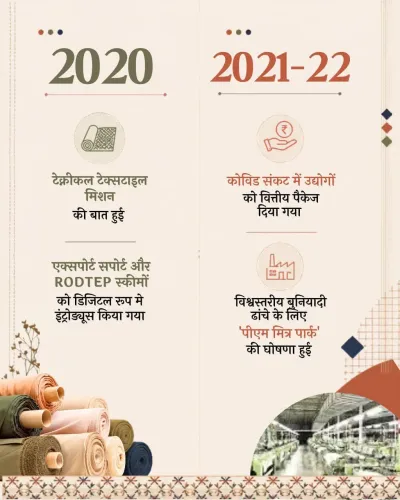
The Production Linked Incentive (PLI) scheme for textiles, notified in September 2021 with an outlay of Rs 10,683 crore, targets man-made fibre and apparel manufacturing to attract large-scale investment. Alongside it, the Pradhan Mantri Mega Integrated Textile Region and Apparel (PM MITRA) scheme, cleared by the Cabinet in 2021, envisages seven integrated textile parks offering plug-and-play infrastructure across the textile value chain — from spinning and weaving to garmenting and logistics. Together, these two flagship programmes form the backbone of India's textile modernisation strategy under the Aatmanirbhar Bharat framework.
On the trade front, India and the United Kingdom formally launched FTA negotiations in January 2022, with textiles listed among the priority chapters. An agreement would grant Indian exporters preferential tariff access to the UK market, one of the world's significant apparel import destinations.
Stakeholders and Impact
The primary beneficiaries of these combined measures are textile exporters and garment micro, small and medium enterprises (MSMEs), which account for a large share of employment in the sector. India's textile and apparel industry employs an estimated 4.5 crore workers directly and supports millions more in ancillary activities, making it one of the country's largest sources of non-farm employment. A successful capture of market share from China — the world's largest textile exporter — could translate into significant export revenue and job creation, particularly in states such as Gujarat, Tamil Nadu, Maharashtra, Telangana and Uttar Pradesh, where PM MITRA parks are being developed.
What's Next
Analysts and industry bodies will closely watch the commissioning timelines and occupancy rates of the seven PM MITRA parks as the most concrete near-term indicator of whether policy intent is translating into ground-level capacity. Quarterly textile and apparel export data will be the other key metric, particularly for man-made fibres and readymade garments where India has historically lagged behind Bangladesh, Vietnam and China. If the India-UK FTA is operationalised, the tariff advantage it confers on Indian textile exporters could provide a measurable boost to shipments in the medium term — making the trade deal's final contours and implementation schedule a closely watched development for the sector.
Point of View
PM MITRA parks, and the India-UK FTA into a single narrative, the ministry is building a political case for the textile sector's centrality to the Viksit Bharat 2047 vision ahead of what could be a critical export-performance review. The invocation of PM Modi's leadership ties sectoral progress directly to the ruling party's broader economic governance narrative. Whether the parks achieve target occupancy and whether the UK trade deal delivers measurable tariff gains will ultimately determine whether this optimism is validated by data.
NationPress
24 Jun 2026
Frequently Asked Questions
What is the India-UK FTA and how does it benefit Indian textiles?
The India-UK Free Trade Agreement is a bilateral trade deal under negotiation since January 2022 that, if concluded, would grant Indian textile and apparel exporters preferential tariff access to the UK market, making Indian goods more price-competitive against rivals such as Bangladesh and Vietnam.
What is the PLI scheme for textiles?
The Production Linked Incentive scheme for textiles was notified in September 2021 with a government outlay of Rs 10,683 crore. It offers financial incentives to manufacturers of man-made fibre fabrics, apparel, and technical textiles to scale up production and attract large investments into the sector.
What are PM MITRA parks?
PM MITRA — Pradhan Mantri Mega Integrated Textile Region and Apparel — is a scheme approved in 2021 to develop seven large integrated textile parks across India, offering plug-and-play infrastructure covering the full value chain from fibre to finished garment.
Why is China's declining textile market share significant for India?
China is the world's largest textile exporter, and as global buyers diversify their supply chains — accelerated by disruptions since 2020 — India stands to capture a larger share of orders in apparel, fabric, and technical textiles, boosting exports and employment.
What is Viksit Bharat 2047 and what role does textiles play?
Viksit Bharat 2047 is the Indian government's official vision to make India a fully developed economy by the centenary of independence. Textiles have been identified as a priority sector within this framework due to their large employment footprint and export potential.