Pralhad Joshi Highlights 12 Years of Middle Class Gains Under Modi

Synopsis
Union Minister Pralhad Joshi has credited the Modi government's twelve-year record with empowering India's middle class through IIM expansion in tier-2 cities, the PM Surya Ghar free electricity scheme, and improvements in healthcare, digital connectivity, and trade access.
Key Takeaways
Union Minister Pralhad Joshi posted on June 15, 2026 crediting 12 years of the Modi government with middle-class empowerment.
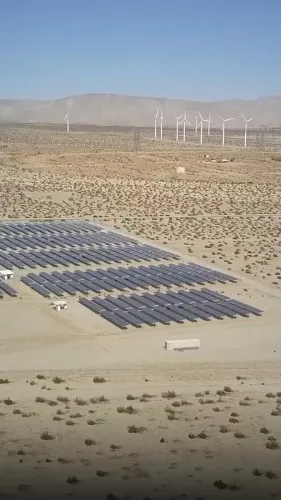
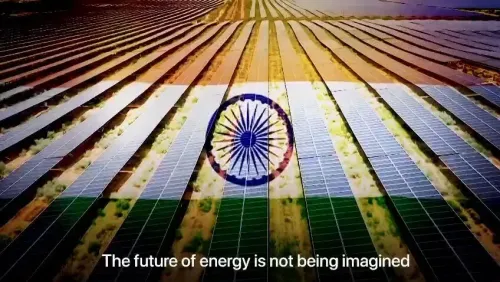
The PM Surya Ghar Muft Bijli Yojana , launched in February 2024 , offers eligible households up to 300 units of free electricity monthly via rooftop solar.
New IIM campuses were established in tier-2 cities including Bodh Gaya , Jammu , Sirmaur , and Sambalpur between 2015 and 2021.
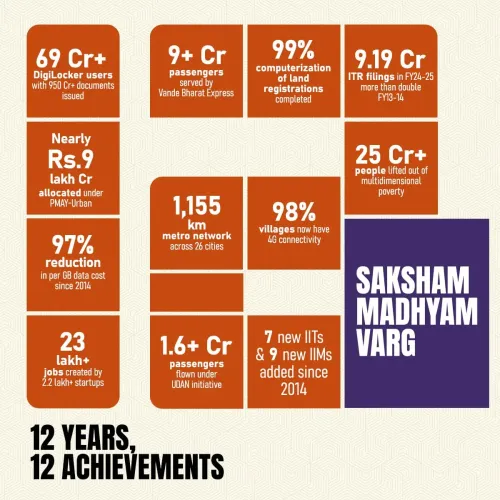
The post covers gains across education, healthcare, digital connectivity, and trade as pillars of middle-class progress.
The hashtag #12YearsOfSakshamMiddleClass signals a coordinated BJP communications push around the government's governance anniversary.
State-wise PM Surya Ghar beneficiary data in upcoming Union Budget documents will be a key indicator of scheme reach.
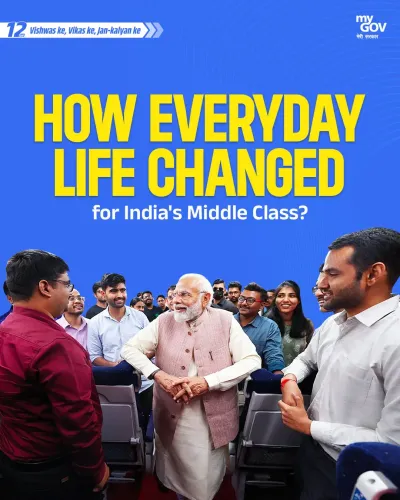
Union Consumer Affairs Minister Pralhad Joshi on Monday, June 15, 2026, credited the Narendra Modi government with transforming the lives of middle-class families over the past twelve years, citing advances in higher education, healthcare, digital connectivity, trade access, and renewable energy.
Context
Posting under the hashtag #12YearsOfSakshamMiddleClass, Joshi wrote that 'the middle class has been empowered like never before' under the leadership of Prime Minister Narendra Modi. The post accompanied a video and enumerated a broad set of policy interventions spanning education, energy, and digital infrastructure as evidence of that empowerment.
The phrase saksham — meaning 'capable' or 'empowered' in Hindi — frames the messaging around self-reliance and upward mobility for urban and semi-urban households, a demographic the BJP has consistently courted since 2014.
Policy Backdrop
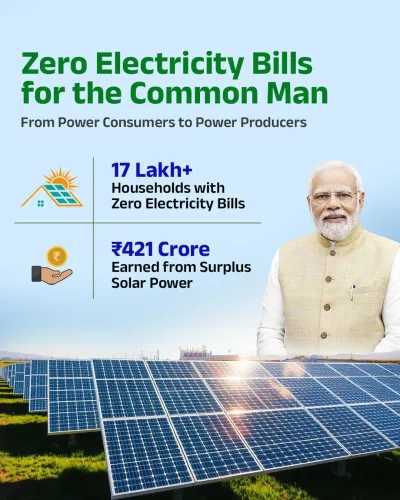
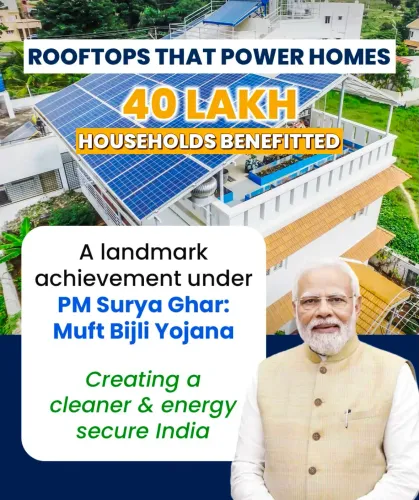
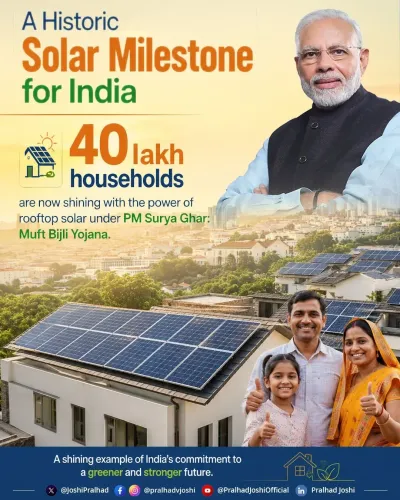
Among the specific schemes Joshi highlighted is the PM Surya Ghar Muft Bijli Yojana, a central government programme launched in February 2024 that subsidises rooftop solar installations and aims to provide households up to 300 units of free electricity every month. The scheme was announced in the 2024-25 Union Budget and is administered through Joshi's own ministry of new and renewable energy.
On the education front, the government expanded the network of Indian Institutes of Management (IIMs) after 2014, establishing new campuses in tier-2 cities including Bodh Gaya, Jammu, Sirmaur, and Sambalpur between 2015 and 2021. Joshi's post specifically referenced 'premier colleges in Tier-2 cities' as part of the middle-class empowerment narrative, pointing to this geographic expansion of elite institutions beyond the four metros.
Successive Union Budgets since 2014 have also introduced health coverage measures, trade facilitation steps, and digital public infrastructure — all cited by the minister as components of a broader strategy to raise living standards for the aspirational middle class.
Stakeholders and Impact
The primary beneficiaries named in the post are middle-class families across India. The PM Surya Ghar scheme, if fully utilised, can significantly reduce monthly electricity expenditure for eligible households, though the benefit of zero bills is contingent on individual consumption patterns and installation status.
The expansion of IIMs and other premier institutions to tier-2 cities directly addresses a long-standing demand from aspirational families outside metropolitan areas who sought access to top-tier management and professional education without relocating to Mumbai, Delhi, Bengaluru, or Kolkata. Digital connectivity and trade opportunity references in the post align with programmes such as BharatNet and the expansion of the Open Network for Digital Commerce (ONDC), though Joshi did not name specific schemes beyond PM Surya Ghar.
What's Next
State-wise progress reports on PM Surya Ghar rooftop solar installations and beneficiary data are expected to feature in forthcoming Union Budget documents and ministry releases, which will provide a clearer picture of on-ground uptake. The political messaging around twelve years of the Modi government is likely to intensify as the BJP positions its governance record before state-level electoral cycles. How the middle-class empowerment narrative translates into specific policy announcements — particularly on income tax relief, healthcare expansion, and education affordability — will be closely watched in the months ahead.
Point of View
The messaging blends economic and social mobility arguments into a single empowerment narrative. The choice to spotlight tier-2 cities is politically significant: it signals that the party is working to consolidate support beyond metros in smaller urban centres that have grown rapidly since 2014. Whether this narrative gains traction will depend on how voters in those cities assess actual delivery on electricity bills, college admissions, and digital access against the promises made.
NationPress
14 Sept 2026
Frequently Asked Questions
What is PM Surya Ghar Muft Bijli Yojana?
PM Surya Ghar Muft Bijli Yojana is a central government scheme launched in February 2024 that subsidises rooftop solar panel installations for households, enabling eligible beneficiaries to receive up to 300 units of free electricity per month.
Which new IIMs were opened in tier-2 cities under the Modi government?
New IIM campuses were established in Bodh Gaya, Jammu, Sirmaur, and Sambalpur, among other locations, between 2015 and 2021 as part of the government's expansion of premier management education beyond the four major metros.
What did Pralhad Joshi say about the middle class on June 15 2026?
Minister Pralhad Joshi stated that the middle class has been 'empowered like never before' under Prime Minister Modi, citing improvements in higher education access, healthcare, digital connectivity, trade opportunities, and zero electricity bills through the PM Surya Ghar scheme over the past twelve years.
What does the hashtag 12YearsOfSakshamMiddleClass mean?
The hashtag marks twelve years of the BJP-led Modi government and uses the Hindi word 'saksham' — meaning capable or empowered — to frame the government's record as one of enabling self-reliance and upward mobility for middle-class families.
How can a household get zero electricity bills under PM Surya Ghar?
Under PM Surya Ghar Muft Bijli Yojana, a household that installs a government-subsidised rooftop solar system and keeps monthly consumption within 300 units can effectively offset its electricity bill; however, the actual saving depends on individual consumption levels and local distribution company terms.