63% Pakistanis can't afford healthy diet, highest rate in South Asia: Report
Synopsis
Pakistan holds the worst healthy diet unaffordability rate in South Asia — yet also has the region's cheapest nutritious food basket. That paradox exposes a collapsing purchasing-power crisis: real incomes down 13%, poverty up to 28.9%, and consumption of nearly every major food item in retreat. With 161 million people priced out of basic nutrition, the data paints a grim picture of a country where inflation's damage has far outlasted the inflation itself.
Key Takeaways
63 per cent of Pakistanis — around 161 million people — could not afford a minimum healthy diet in 2025 .
Pakistan has the highest rate of healthy diet unaffordability in South Asia , despite having the region's lowest-cost nutritious food basket.
Real household incomes fell by nearly 13 per cent after adjusting for inflation.
Poverty rose from 21.9 per cent to 28.9 per cent , adding an estimated 25 million people below the poverty line.
Consumption of 13 out of 14 key food items declined, with pulses down 26% , rice down 19% , and meat down 18% .
Global hunger, by contrast, declined to 7.8 per cent in 2025 from 8.6 per cent in 2022, making Pakistan a regional outlier.
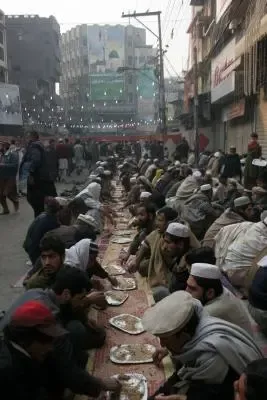
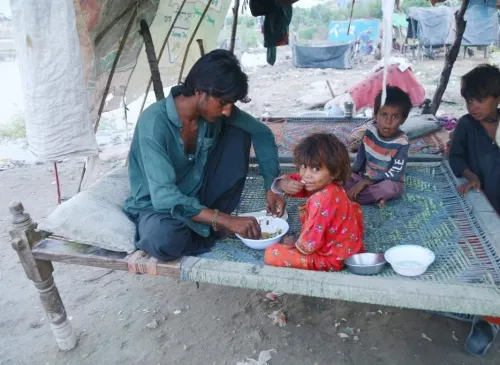
Nearly 63 per cent of Pakistan's population — approximately 161 million people — could not afford the cheapest nutritionally adequate diet in 2025, according to a report published in The News Pakistan. The finding gives Pakistan the highest rate of healthy diet unaffordability in South Asia, even as the country recorded the region's lowest-cost nutritious food basket.
The Scale of the Crisis
The report defines unaffordability as the inability to purchase the minimum combination of grains, pulses, milk, eggs, fruits, vegetables, and other nutritious items after accounting for essential non-food expenses such as housing, transport, and utilities. That two-thirds of a nation cannot clear even this baseline threshold underscores the depth of Pakistan's food security challenge.
Notably, this comes at a moment when global hunger indicators are showing modest improvement. The share of the world's population facing hunger declined to 7.8 per cent in 2025, down from 8.1 per cent in 2024 and 8.6 per cent in 2022 — making Pakistan's trajectory a stark outlier.
Purchasing Power Has Not Recovered
Food affordability remains severely strained in Pakistan despite a moderation in inflation from the peaks recorded in 2023. Analysts cited in the report cautioned that while the pace of price increases has slowed, household purchasing power has not recovered from the sharp erosion caused by the earlier inflation surge.
According to the report, real household incomes fell by nearly 13 per cent after adjusting for inflation. Over the same period, poverty rose from 21.9 per cent to 28.9 per cent, pushing an estimated 25 million additional people below the poverty line.
Dietary Patterns in Sharp Decline
The deterioration in purchasing power is directly visible in what Pakistani households are eating. Consumption of 13 out of 14 key food items declined between the two most recent survey rounds. Per capita monthly consumption of rice fell by nearly 19 per cent, pulses by 26 per cent, and milk by 10 per cent. Combined consumption of mutton, beef, and chicken dropped by approximately 18 per cent.
This compression across virtually every food category signals not a shift in dietary preference but a forced retreat driven by affordability constraints — a pattern economists associate with long-term nutritional damage, particularly for children and women of reproductive age.
South Asia Context
Pakistan's position as the worst performer on healthy diet unaffordability in South Asia is particularly striking given that it also has the region's lowest-cost nutritious food basket. The paradox points to an income and purchasing-power problem rather than a supply or pricing problem alone. Neighbouring India, Bangladesh, and Sri Lanka — despite their own food security challenges — record lower rates of healthy diet unaffordability, according to the report.
With poverty levels rising and real incomes still suppressed, analysts warn that a sustained recovery in dietary access will require both macroeconomic stabilisation and targeted nutritional support programmes. The trajectory, as of 2025, remains deeply concerning.
Point of View
Yet the worst unaffordability rate. That means the crisis is not about food prices; it is about collapsed household incomes. Inflation has moderated, but purchasing power has not recovered — a distinction policymakers and the IMF programme narrative have glossed over. The consumption data is particularly alarming: when pulses — the protein of last resort for low-income households — fall by 26 per cent, you are looking at a nutritional emergency unfolding in slow motion. Macroeconomic stabilisation alone will not fix this; without direct income support and nutrition-specific interventions, the damage to human capital will compound for years.
NationPress
7 Aug 2026
Frequently Asked Questions
What percentage of Pakistanis cannot afford a healthy diet?
According to a report published in The News Pakistan, approximately 63 per cent of Pakistanis — around 161 million people — could not afford the cheapest nutritionally adequate diet in 2025, after accounting for essential non-food expenses like housing and transport.
Why does Pakistan have the highest healthy diet unaffordability in South Asia?
Pakistan's unaffordability rate is the highest in South Asia despite having the region's lowest-cost nutritious food basket, pointing to a purchasing-power crisis rather than a food supply problem. Real household incomes fell by nearly 13 per cent after adjusting for inflation, leaving households unable to afford even low-cost nutritious food.
How has poverty changed in Pakistan recently?
Poverty in Pakistan rose from 21.9 per cent to 28.9 per cent, pushing an estimated 25 million additional people below the poverty line, according to the report. This deterioration coincided with the inflation surge of 2023, from which household incomes have not yet recovered.
Which foods have seen the sharpest decline in consumption in Pakistan?
Consumption of 13 out of 14 key food items declined between the two most recent survey rounds. Pulses fell by 26 per cent, rice by nearly 19 per cent, milk by 10 per cent, and combined meat consumption (mutton, beef, and chicken) dropped by about 18 per cent.
How does Pakistan's food crisis compare to global hunger trends?
Global hunger has been declining — the share of the world's population facing hunger fell to 7.8 per cent in 2025 from 8.6 per cent in 2022. Pakistan bucks this trend, recording worsening food affordability and dietary decline, making it a stark outlier against the improving global picture.