Bangladesh garment exports to EU fall 12% amid labour unrest in 2026
Synopsis
Bangladesh's garment sector — the backbone of its economy at over 80% of export earnings — lost nearly 12% of its EU revenue in nine months, with its market share slipping from 21% to 19%. Labour unrest, cotton-only concentration, and sustainability pressure are compounding into a structural crisis, even as rivals China and Vietnam pull ahead on man-made fibre. The timing may hand India a rare opening.
Key Takeaways
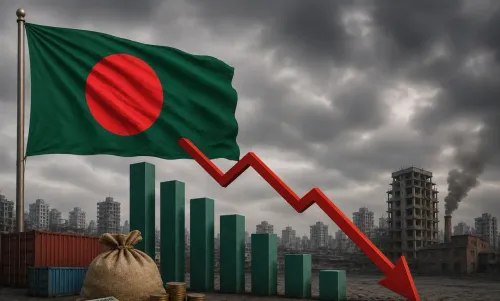
Bangladesh RMG exports to the EU fell 11.91 per cent to Euro 13.48 billion in January–September 2026 .
Export volume dropped 5.74 per cent ; unit price fell 6.54 per cent to Euro 13.70 per kg — about 30 per cent below the EU average.
Bangladesh's share of EU apparel imports declined from 21.10 per cent to 19.06 per cent .
Labour unrest over minimum wage demands, factory closures, and political volatility following the 2024 power transition are key drivers of the crisis.
Heavy dependence on cotton products and limited man-made fibre capacity are structural disadvantages against China and Vietnam .
India's apparel exports to the EU peaked at USD 4.66 billion in 2025–26 ; new EU/UK trade agreements could ease a 10–12 per cent duty disadvantage.
Bangladesh's readymade garment (RMG) exports to the European Union dropped 11.91 per cent to Euro 13.48 billion in January–September 2026, compared with the same period a year earlier, according to Eurostat data cited by Bangladeshi media. Prolonged labour unrest, structural competitiveness gaps, and political volatility have combined to erode the country's dominant position in the EU apparel market.
How the Decline Unfolded
The fall was not uniform across the year. Exports were down a steep 20.89 per cent in January–April, recovered to near-flat territory in May–August at a decline of just 1.25 per cent, but deteriorated again in September, sliding 9.49 per cent. The data shows the sector struggled to sustain even the modest mid-year stabilisation.
Beyond value, volumes also contracted: export volume fell 5.74 per cent, while the unit price dropped 6.54 per cent to Euro 13.70 per kg — roughly 30 per cent below the EU average. Lower prices accounted for slightly more than half of the total value lost. Bangladesh's share of EU apparel imports slipped from 21.10 per cent to 19.06 per cent during the period.
Labour Unrest and the Wage Crisis
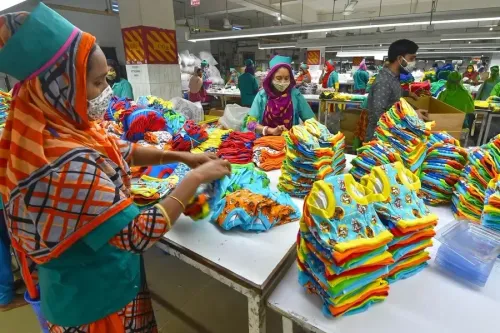
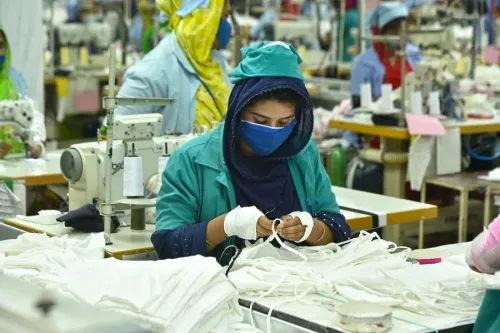
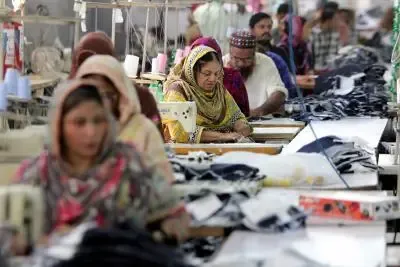
At the heart of the disruption are RMG workers' protests centred on demands for a substantial increase in the minimum monthly wage. Protesting workers argue that existing pay scales are inadequate in the face of rising food prices, housing costs, and broader inflation. The crisis has since evolved beyond wages alone, encompassing factory closures, delayed wage payments, and layoffs — all of which have deepened worker dissatisfaction.
Industry observers note that the political transition in 2024 — following widespread civil unrest — created conditions in which long-standing grievances over wages, job security, and working conditions resurfaced with renewed intensity across several industrial zones. Reports indicate that labour movements gained significant momentum in this changed environment.
Structural Weaknesses Compounding the Problem
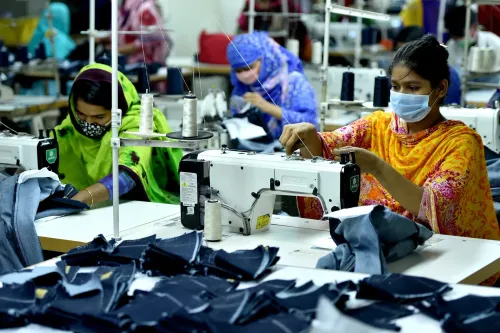
Beyond unrest, analysts point to deeper structural vulnerabilities. Bangladesh's RMG sector is heavily concentrated in cotton-based products, with limited investment in artificial or man-made fibres. This leaves the country at a disadvantage against rivals such as China and Vietnam, which have developed extensive man-made fibre manufacturing capacities and benefit from integrated supply chains — including direct access to fabric from Chinese mills.
Growing energy costs and increasingly stringent EU sustainability requirements are further squeezing Bangladesh's competitiveness in a market where environmental compliance is no longer optional. The RMG sector accounts for more than four-fifths of Bangladesh's total export earnings, making these headwinds a matter of national economic concern.
Government Response
The Bangladesh government has initiated steps to manage the crisis. Authorities have sought to restore order while keeping production running in export-oriented manufacturing zones, arguing that a negotiated settlement is essential to preserving investor confidence. A Minimum Wage Board has been tasked with reviewing the payment structure for garment workers, with indications that a revised recommendation will follow consultations with labour representatives and factory owners. Security has also been reinforced in major industrial districts to prevent violence and maintain factory operations.
India's Opportunity in the Shifting Landscape
The EU is also the most prominent destination for Indian garment exporters, with apparel exports peaking at USD 4.66 billion (approximately Euro 4.23 billion) in fiscal year 2025–26. India currently ranks sixth among the world's largest apparel exporters. Indian exporters reportedly face a duty disadvantage of 10 to 12 per cent compared with rivals such as Bangladesh, Pakistan, and Turkey. However, new trade agreements with the EU and UK — which may bring tariff reductions — could narrow that gap, while India's strengths in cotton and yarn production offer a supply-chain advantage. As Bangladesh navigates its structural and political challenges, the competitive rebalancing in EU apparel sourcing is a trend that Indian exporters are watching closely.
Point of View
Man-made fibre versatility, and supply-chain resilience that Dhaka has not invested in. The 2024 political transition accelerated a wage grievance that was already building; the government's Minimum Wage Board response is overdue, but settling wages alone will not restore competitiveness. What is striking is the India angle — decades of duty disadvantage have kept Indian exporters behind Bangladesh and Pakistan in Brussels, but new trade agreements and Bangladesh's self-inflicted market-share loss are converging into a rare window that Indian exporters must have the capacity to exploit, not just the tariff arithmetic.
NationPress
17 Nov 2026
Frequently Asked Questions
By how much did Bangladesh's garment exports to the EU fall in 2026?
Bangladesh's RMG exports to the EU fell 11.91 per cent to Euro 13.48 billion in January–September 2026, compared with the same period a year earlier, according to Eurostat data. The sharpest decline — 20.89 per cent — was recorded in January–April, before a brief stabilisation and a renewed 9.49 per cent fall in September.
What is driving the labour unrest in Bangladesh's garment sector?
Workers are demanding a substantial increase in the minimum monthly wage, arguing that current pay is insufficient to cover rising food prices, housing costs, and inflation. The unrest has broadened into a wider crisis involving factory closures, delayed wage payments, and layoffs, compounded by political uncertainty following Bangladesh's 2024 power transition.
What structural challenges does Bangladesh's RMG sector face in the EU market?
Bangladesh is heavily concentrated in cotton-based apparel and has made limited investment in man-made or artificial fibre production, putting it at a disadvantage against China and Vietnam, which have integrated man-made fibre supply chains. Growing EU sustainability and energy requirements are adding further pressure on Bangladesh's cost-based competitiveness.
How does the Bangladesh export decline affect India?
India is the sixth-largest apparel exporter globally, with EU exports peaking at USD 4.66 billion in 2025–26. Indian exporters currently face a 10–12 per cent duty disadvantage compared to Bangladesh and others, but new trade agreements with the EU and UK could reduce that gap. Bangladesh's weakening market share may open sourcing opportunities for Indian garment exporters.
What steps is Bangladesh's government taking to address the crisis?
The Bangladesh government has set up a Minimum Wage Board to review garment workers' pay, with a revised recommendation expected after consultations with labour and factory representatives. Authorities have also increased security in major industrial districts and urged workers to return to work while keeping export manufacturing zones operational.