Taiwan civic groups slam China's ethnic unity law as forced assimilation

Synopsis
China's ethnic unity law, due 1 July, has drawn sharp condemnation from Taiwan's civic groups who call it a blueprint for forced assimilation — one that deliberately conflates 'the Chinese nation' with the Republic of China to erode Taiwan's international identity. Activists warn it is the CCP's reunification agenda dressed in the language of harmony.
Key Takeaways
China's law on promoting ethnic unity and progress is set to be promulgated on 1 July .
Taiwan Economic Democracy Union convener Lai Chung-chiang called the law repression targeting Uyghurs , Tibetans , Southern Mongolians , Hong Kongers , and Taiwanese .
Critics say the law exploits linguistic similarity between zhonghua minzu and zhonghua minguo to undermine Taiwan's international standing.
Soochow University professor Chen Fang-yu argued Chinese nationalism structurally cannot accommodate ethnic plurality.
Separately, Taiwan's MODA flagged four Chinese apps — Amap , bilibili , iQIYI , BIMOBIMO — as national security risks under China's data-sharing laws.
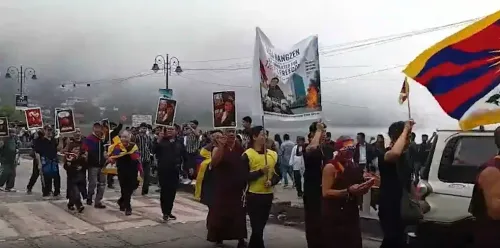
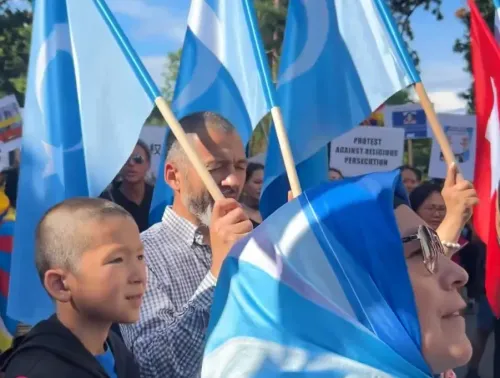
Civic groups in Taiwan on 14 June condemned China's upcoming law on promoting ethnic unity and progress, set to be promulgated on 1 July, describing it as a tool for forced assimilation and cultural cleansing. The condemnation was voiced publicly on Saturday, with activists and academics warning that the legislation threatens the distinct identities of multiple ethnic and regional communities under Beijing's rule.
What the Law Does
According to the groups, the law will impose a singular national identity across sectors including education, housing, population movement, community life, culture, tourism, and development. Critics argue it is designed to weaken the identities of non-Han ethnic groups and accelerate the so-called 'integration' of diverse communities into a monolithic Chinese national framework.
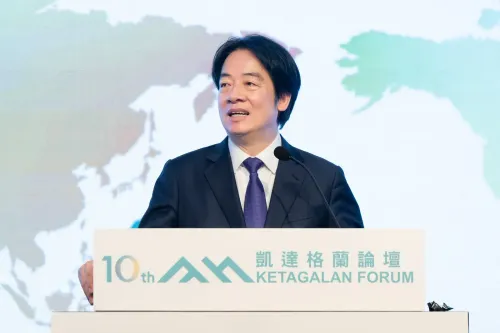
Taiwan Economic Democracy Union convener Lai Chung-chiang described the law as repression disguised as unity, arguing it specifically targets Uyghurs, Tibetans, Southern Mongolians, Hong Kongers, and Taiwanese. He also flagged a deliberate linguistic manoeuvre — the law exploits the similarity in wording between zhonghua minzu ('the Chinese nation') and zhonghua minguo ('the Republic of China') to undermine Taiwan's standing in international cooperation efforts.
The Reunification Angle
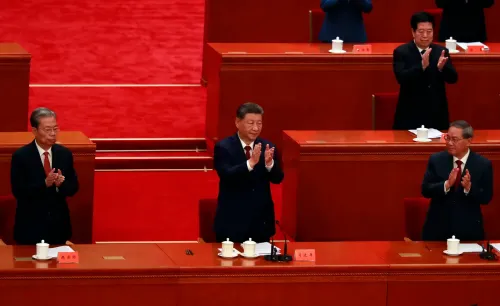
Lai argued that the Chinese Communist Party's (CCP) stated goal of the 'great revival of the zhonghua minzu' is, at its core, a reunification project — both territorial and ethnic. He pointed to Chinese President Xi Jinping's 2019 'Five-point Plan' and a 2022 white paper issued by China's Taiwan Affairs Office — titled 'The Taiwan Question and China's Reunification in the New Era' — as documents that explicitly link the concept of national rejuvenation with the objective of reunification with Taiwan.
Soochow University political science associate professor Chen Fang-yu said on Saturday that the underlying logic of Chinese nationalism demands that people in Taiwan and Hong Kong identify as 'Chinese' or 'Han', adding that such nationalism structurally cannot accommodate ethnic plurality.
Taiwan's Counter-Definition
The civic groups drew a sharp contrast between Beijing's and Taipei's concepts of 'unity'. They contended that for the CCP, unity rests on state coercion and the erasure of cultural dignity, while Taiwan's own framework prioritises the protection of ethnic diversity and autonomous cultural expression. Critics accused Beijing of making little effort to conceal its expansionist ambitions, warning that Taiwan is increasingly likely to face hegemonic pressure as the law takes effect.
Parallel Concern: Chinese App Security Risks
The civic alarm over the ethnic unity law comes alongside a separate but related digital security warning. In May, Taiwan's Ministry of Digital Affairs (MODA) urged citizens to stay alert to cybersecurity risks from four Chinese-developed mobile apps: Amap, bilibili, iQIYI, and BIMOBIMO. Amap was flagged as carrying the highest number of risk behaviours, including continuously reading users' location, accessing contacts, and requesting microphone and audiovisual permissions on both major operating systems.
MODA's Administration for Cyber Security (ACS) noted that these apps may be legally obligated to share user data with Chinese authorities under China's Cybersecurity Law and National Intelligence Law, posing what officials described as 'a greater risk to national security.' Senior ACS official Lee Yu-wei urged citizens to scrutinise app permissions broadly — not only for Chinese-developed apps — and to use cybersecurity tools where necessary.
Together, the ethnic unity law and the digital surveillance concerns reflect a deepening anxiety in Taiwan about the multiple vectors through which Beijing is seen to be extending its influence.
Point of View
And Taiwan's civic groups are right to read it as such. The deliberate conflation of zhonghua minzu with zhonghua minguo is a calibrated move to shrink the conceptual space between the People's Republic and the Republic of China, complicating Taiwan's international positioning. What mainstream coverage often underweights is the cumulative effect: paired with digital surveillance risks from Chinese apps and the 2022 reunification white paper, this law is one more layer in a multi-domain pressure campaign. The question is not whether Beijing has expansionist intent — it has stated it openly — but how quickly Taiwan's partners in the international community will treat these legal instruments as geopolitical acts rather than internal Chinese affairs.
NationPress
14 Sept 2026
Frequently Asked Questions
What is China's ethnic unity and progress law?
It is a Chinese law set to be promulgated on 1 July that mandates the 'integration' of different ethnic groups through policies spanning education, housing, culture, tourism, and development. Taiwan's civic groups and academics argue it is designed to impose a single Han-centric national identity and suppress the distinct cultures of Uyghurs, Tibetans, Southern Mongolians, Hong Kongers, and Taiwanese.
Why are Taiwan's civic groups concerned about this law?
They argue the law amounts to forced assimilation and cultural cleansing, and that it deliberately exploits linguistic overlap between 'the Chinese nation' (zhonghua minzu) and 'the Republic of China' (zhonghua minguo) to erode Taiwan's international identity. Activists also connect the law to the CCP's stated reunification agenda.
Who is Lai Chung-chiang and what did he say?
Lai Chung-chiang is the convener of the Taiwan Economic Democracy Union. He said the law represents repression under the guise of unity, specifically targeting Uyghurs, Tibetans, Southern Mongolians, Hong Kongers, and Taiwanese, and that its ultimate goal is territorial and ethnic unification under CCP rule.
How does the law connect to China's reunification goals?
Lai Chung-chiang pointed to President Xi Jinping's 2019 'Five-point Plan' and a 2022 white paper from China's Taiwan Affairs Office as documents that explicitly link the 'great rejuvenation of the zhonghua minzu' to reunification with Taiwan. Critics argue the ethnic unity law is a legal extension of that political objective.
What is the separate cybersecurity concern raised by Taiwan's government?
In May, Taiwan's Ministry of Digital Affairs flagged four Chinese-developed apps — Amap, bilibili, iQIYI, and BIMOBIMO — as potential national security risks. Officials said these apps may be required to share user data with Chinese authorities under China's Cybersecurity Law and National Intelligence Law, with Amap identified as carrying the highest number of risk behaviours.