White House Claims Iran's Military Complex Destroyed
Synopsis
The White House declared on June 24, 2026 that Iran's military complex has been destroyed, framing the claim against what it called 'continuous and blatant Fake News lies.' The statement, posted on X with a video, marks a sharp escalation in US public messaging on Iran.
Key Takeaways
The White House posted on X on June 24, 2026 claiming Iran's military complex has been destroyed.
The post explicitly accused media of spreading 'continuous and blatant Fake News lies' about the situation.
The statement was accompanied by a video but contained no specific operational details.
US-Iran tensions have been elevated since the 2018 withdrawal from the JCPOA nuclear deal.
Pentagon follow-up statements and Iranian official responses are being closely awaited by the international community.
India faces potential diplomatic and economic implications given its ties with both Washington and Tehran .
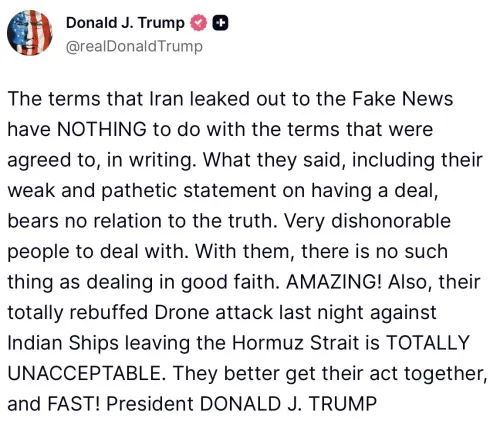
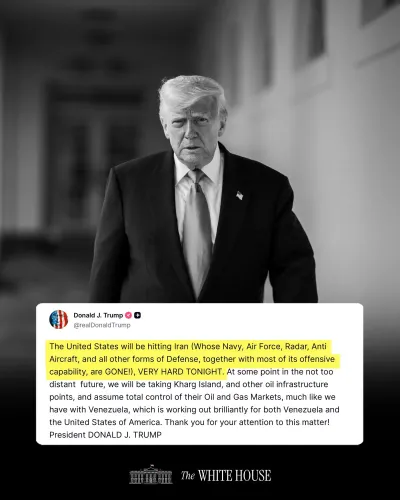
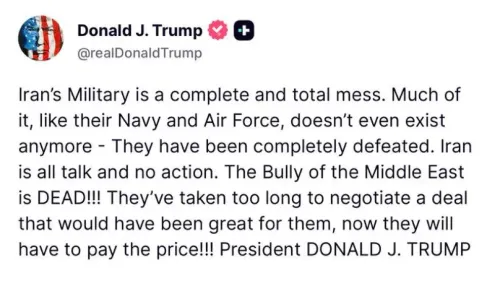
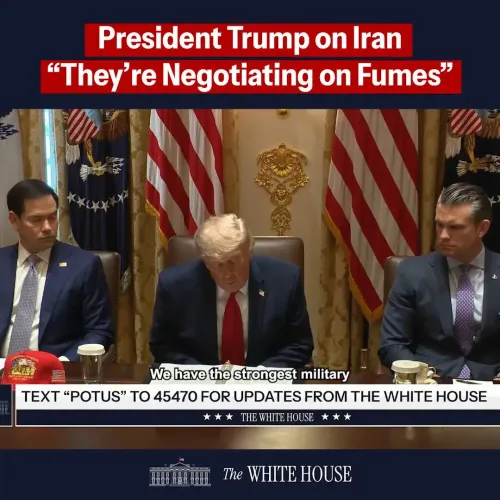
The White House, the official communications account of the Executive Office of the President of the United States, posted on X on Tuesday, June 24, 2026, asserting that Iran's military complex has been destroyed, while simultaneously accusing media outlets of spreading what it called 'continuous and blatant Fake News lies.'
Context
The post states: 'Despite continuous and blatant Fake News lies, Iran's military complex has been destroyed.' The statement was accompanied by a video, though no further operational details were provided in the post itself. The language is direct and declarative, framing the claim against a backdrop of alleged media misrepresentation.
The White House's public messaging on Iran has historically followed periods of military action or sanctions enforcement, often paired with accusations of media distortion. This pattern has been a recurring feature of US-Iran policy communications since the early 2010s.
Policy Backdrop
US-Iran tensions have remained elevated since Washington's withdrawal from the Joint Comprehensive Plan of Action (JCPOA) nuclear agreement in 2018, which triggered a renewed sanctions regime and periodic military posturing between the two nations. Iran's nuclear programme and its support for regional proxy forces have remained central flashpoints in the bilateral relationship.
White House statements asserting outcomes against Iranian military infrastructure represent a significant escalation in public communication, regardless of the operational specifics. Such declarations carry weight in shaping international perceptions of the balance of power in the Middle East.
Stakeholders and Impact
The primary stakeholders in this development include the Iranian military establishment, the US Congress — which holds oversight authority over military engagements — and regional actors including Israel, Saudi Arabia, and Iraq, all of whom are directly affected by shifts in Iranian military capability. Allied nations and international bodies monitoring the Iranian nuclear file are also closely watching.
For India, which maintains significant trade and energy ties with Iran while also managing a strategic partnership with the United States, any confirmed large-scale military action against Tehran would carry immediate diplomatic and economic implications, particularly for energy supply chains and the Chabahar port project.
What's Next
Official follow-up statements from the Pentagon and potential responses from Iranian officials will be critical in establishing the scope and veracity of the claim. US Congressional hearings on regional escalation are a likely next step, given the constitutional requirements around the use of military force.
The international community, including the United Nations and key European partners, is expected to seek independent verification of the White House's assertion. The trajectory of US-Iran relations and broader Middle East stability now hinges on how both sides respond in the coming days.
Point of View
Such a declaration without accompanying Pentagon detail raises immediate questions about scope, legality, and congressional oversight. The broader arc here is a US-Iran confrontation that has been building since the JCPOA collapse, now potentially reaching a decisive, if unverified, inflection point.
NationPress
23 Jun 2026
Frequently Asked Questions
Has the US attacked Iran's military in 2026?
The White House posted on June 24, 2026 claiming Iran's military complex has been destroyed, but no independent verification or Pentagon operational details have been publicly confirmed as of the time of this report.
What did the White House say about Iran on X?
The White House stated: 'Despite continuous and blatant Fake News lies, Iran's military complex has been destroyed,' posting the message on X alongside a video.
What is the history of US-Iran military tensions?
US-Iran tensions escalated sharply after Washington withdrew from the JCPOA nuclear agreement in 2018, leading to renewed sanctions, proxy conflicts, and periodic direct confrontations, including the killing of Iranian General Qasem Soleimani in 2020.
How does this affect India?
India maintains significant trade, energy, and infrastructure ties with Iran, including the Chabahar port project, meaning any large-scale confirmed military action against Tehran could have direct diplomatic and economic consequences for New Delhi.
What happens next after the White House's Iran claim?
Independent verification by the Pentagon, responses from Iranian officials, and potential US Congressional hearings on the use of military force are the immediate next steps being watched by international observers.