Khattar Chairs Meet to Finalise PARIVARTAN Scheme for Delhi-NCR
Synopsis
Union Minister Manohar Lal Khattar chaired a meeting on 14 July 2026 to finalise guidelines for the PARIVARTAN Scheme, which aims to phase out ageing commercial vehicles in Delhi-NCR and shift fleet operators to electric and clean-mobility alternatives to cut transport emissions.
Key Takeaways
Union Minister Manohar Lal Khattar chaired a meeting on 14 July 2026 to finalise guidelines for the PARIVARTAN Scheme .
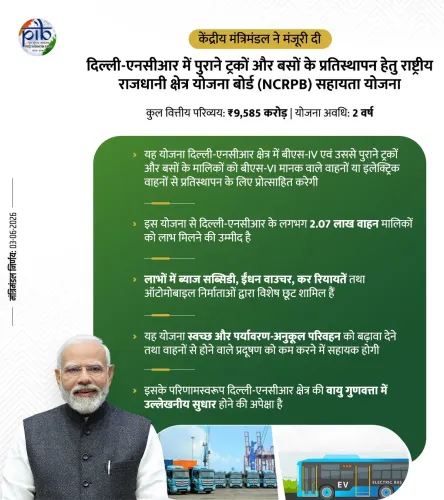
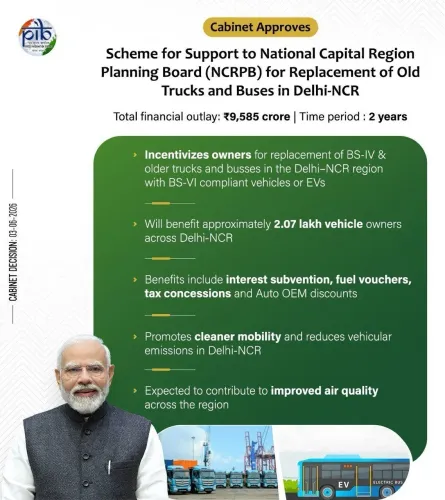
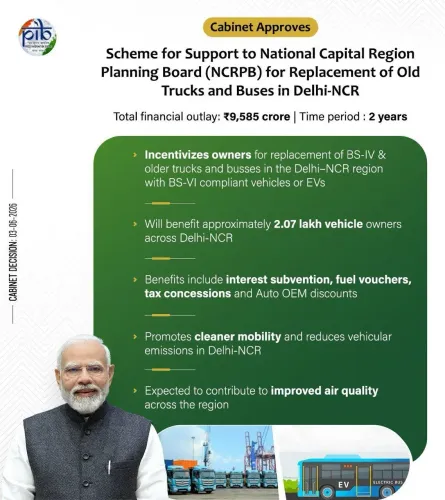
The scheme targets ageing trucks and buses in the Delhi-NCR region for phase-out and replacement with electric vehicles.
Its stated goals include reducing transport-related emissions, improving air quality, and advancing India's sustainable urban development agenda.
PARIVARTAN builds on earlier central measures including the FAME-II scheme ( 2019 ), Bharat Stage-VI norms ( April 2020 ), and the Commission for Air Quality Management ( 2020 ).
Key stakeholders include truck and bus operators, EV manufacturers, and Delhi-NCR residents bearing the health burden of vehicular pollution.
Final guidelines, budget allocation, and coordination with the Ministry of Road Transport will determine the scheme's rollout timeline and scale.
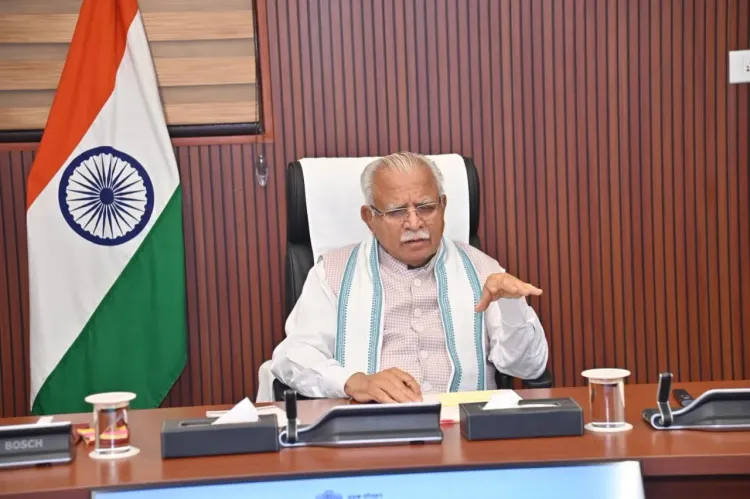
Union Minister of Housing and Urban Affairs Manohar Lal Khattar on Tuesday, 14 July 2026, chaired a high-level meeting to finalise guidelines for the PARIVARTAN Scheme, a central government initiative aimed at phasing out ageing trucks and buses operating in the Delhi-NCR region and accelerating their replacement with electric vehicles and other clean-mobility alternatives.
Context
Khattar announced the development on social media, stating that the scheme 'will encourage the adoption of electric vehicles and other clean mobility solutions, helping reduce transport-related emissions, improve air quality, and support India's broader commitment to sustainable urban development.' The meeting marks a formal step toward operationalising PARIVARTAN, with guidelines now in the final stages of approval before rollout.
Delhi-NCR — spanning the national capital and adjoining districts in Haryana, Uttar Pradesh, and Rajasthan — consistently records some of the worst air-quality indices in the country. Heavy commercial vehicles, many of them ageing and non-compliant with current emission standards, are a significant contributor to particulate pollution across the region.
Policy Backdrop
The PARIVARTAN Scheme sits within a broader policy architecture that successive central governments have built around cleaner road transport. The FAME-II (Faster Adoption and Manufacturing of Electric Vehicles) scheme, launched in 2019, extended demand incentives and funding for charging infrastructure to nudge fleet operators toward EVs. Simultaneously, the nationwide rollout of Bharat Stage-VI emission norms from April 2020 raised the bar for permissible tailpipe emissions from new vehicles.
The Commission for Air Quality Management in NCR and Adjoining Areas, constituted in 2020, gave the Centre statutory teeth to coordinate pollution-control action across state boundaries in the region. PARIVARTAN appears designed to complement these existing mechanisms by targeting the existing stock of older, high-polluting commercial vehicles rather than only regulating new ones.
India has also linked such transport-sector interventions to its 2070 net-zero pledge and the climate commitments made at COP26, framing urban air-quality measures as part of a long-term decarbonisation strategy rather than standalone regulatory exercises.
Stakeholders and Impact
Truck and bus operators in Delhi-NCR stand at the centre of the scheme's implementation. Many small fleet owners run ageing vehicles because replacement costs are prohibitive; the success of PARIVARTAN will depend heavily on the financial incentives — likely scrappage bonuses and EV purchase subsidies — built into the finalised guidelines.
Electric vehicle manufacturers and charging-infrastructure providers are expected to benefit from a structured demand signal if the scheme scales. For Delhi-NCR residents, particularly those in areas with high freight-traffic density, a measurable reduction in diesel particulate matter would represent a direct public-health gain. The Ministry of Road Transport and Highways may issue parallel notifications on scrappage incentives that dovetail with the scheme.
What's Next
The immediate next step is the formal release of the PARIVARTAN guidelines, following the conclusion of Tuesday's meeting. Budget allocation — whether through a dedicated line item or through existing urban-development and clean-energy funds — will determine the scheme's reach and pace of implementation.
Analysts will watch for coordination between Khattar's Ministry of Housing and Urban Affairs and the ministries of Road Transport, Heavy Industries, and Petroleum, given that a vehicle-transition programme of this scale requires aligned incentives across multiple departments. Any state-level uptake by the Delhi, Haryana, Uttar Pradesh, and Rajasthan governments will also be critical to on-ground execution within the NCR boundary.
Point of View
The government signals that this is as much an urban-development intervention as a pollution-control measure. The move also gives Khattar, who oversees both power and urban affairs, a high-visibility environmental deliverable ahead of what will be closely watched air-quality assessments in the NCR. Whether the scheme gains traction will hinge on the generosity of scrappage and EV-purchase incentives, which small fleet operators will scrutinise before committing to costly transitions.
NationPress
13 Oct 2026
Frequently Asked Questions
What is the PARIVARTAN Scheme?
The PARIVARTAN Scheme is a central government initiative to phase out old, high-polluting trucks and buses in the Delhi-NCR region and replace them with electric vehicles and other clean-mobility alternatives, with the goal of reducing transport emissions and improving air quality.
Who announced the PARIVARTAN Scheme?
Union Minister of Housing and Urban Affairs Manohar Lal Khattar announced that he chaired a meeting on 14 July 2026 to finalise the scheme's guidelines.
How does PARIVARTAN relate to earlier EV and pollution policies?
It builds on the FAME-II scheme (2019) for EV incentives, Bharat Stage-VI emission norms (April 2020), and the Commission for Air Quality Management (2020), targeting the existing stock of ageing vehicles rather than only new ones.
Who will benefit from the PARIVARTAN Scheme?
Primary beneficiaries include truck and bus operators who receive incentives to scrap old vehicles, EV manufacturers who gain a structured demand signal, and Delhi-NCR residents who stand to see improved air quality.
When will the PARIVARTAN Scheme be launched?
The guidelines were being finalised as of 14 July 2026 ; the formal release of guidelines and subsequent budget allocation will determine the official launch and rollout timeline.